
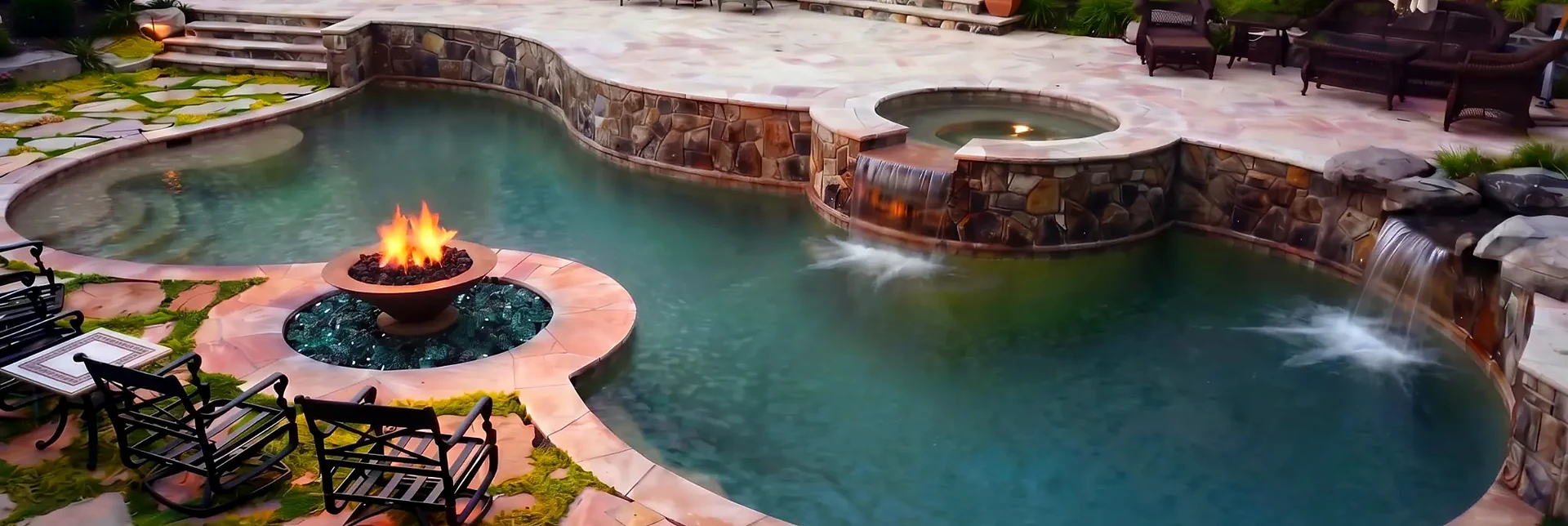
Choosing the right pool depth is one of the most consequential decisions a homeowner makes when planning a custom gunite pool. Depth affects safety, functionality, construction complexity, seasonal maintenance in northeastern climates, and long-term enjoyment. The optimal depth depends on intended uses—family recreation, lap swimming and water sports, or diving—and on site-specific variables common to southeastern Pennsylvania and western New Jersey, such as freeze-thaw cycles, soil type, groundwater, township permitting, and access for heavy equipment.
This article synthesizes design criteria and regional constraints, ranks the strongest pool-depth options by primary use case, and provides a clear decision framework for different property types and lifestyles. It draws on professional practice at Scott Payne Custom Pools (SPCP) to make actionable recommendations while explaining trade-offs, construction considerations, and regulatory and safety issues relevant to homeowners and design teams in the region.
- Match depth to primary use: 3.5–4.5 ft for family recreation, 4–6 ft for lap and water sports, 8–9 ft minimum for diving with approved diving equipment; mixed-use pools need variable-depth plans.
- Account for Pennsylvania/New Jersey site factors—freeze-thaw, clay or rock, and high groundwater—when selecting depths and pool shell thickness, floor slope, and drainage strategies.
- Consider multi-depth features: beach entries, vanishing edges, deep ends, and built-in bulkheads or moveable floors for adjustable depth and multi-use versatility.
- Consult local township codes and permit officers early; some municipalities have depth-related safety or setback rules and specific requirements for diving boards and ladders.
- SPCP recommends design options tailored to family, sports, or diving priorities and offers phased build or retrofit approaches for limited-access sites or seasonal constraints.
For broader planning guidance, explore our Pool Decisions resource center.
Selection Criteria: How We Evaluate Pool Depths
Before ranking specific depths, we establish objective criteria that tie a pool’s depth to intended function, constructability in the region, safety, maintenance, and long-term flexibility. These criteria guide the design conversation and reduce subjective bias.
Key selection criteria include:
- Primary use and user age profile: Family pools with young children require shallower, gradual entries and safety features; athletic pools need consistent depth for streamline swimming and turns.
- Safety and regulatory constraints: Diving requires certified depths and board mounting standards; local building codes may impose additional limitations.
- Site geotechnical conditions: Pennsylvania’s clay soils, shale ledges, and variable groundwater levels affect excavation depth and drainage systems; deeper pools may require more robust dewatering and structural design.
- Freeze-thaw durability: Repeated freezing requires attention to shell thickness, backfill material, and edge drainage to prevent frost heave and cracking.
- Construction access and logistics: Narrow lots, utility easements, and township permit timing can limit the feasible depth due to equipment reach and excavation staging.
- Maintenance and operational cost: Deeper pools increase water volume, heating demand, and chemical usage; shallow pools are cheaper to operate but less versatile for sports and diving.
- Future adaptability: Consider modular solutions like zero-entry shelves, movable floors, or retractable bulkheads that provide changing depth profiles over time.
Top Options Ranked by Primary Use Case
Using the criteria above, the most suitable depth options group naturally by intended use. Below we rank and explain each option and why it suits a use case.
1. Family Recreation: 3.5–4.5 feet (Best-in-class for young families)
Depth range: 3.5–4.5 ft for main swim area; may pair with a shallow 0–2 ft beach entry or 2–3 ft tanning ledge for children and lounging.
Why it qualifies: This shallow-to-moderate depth minimizes accidental submersion risks for small children, supports standing play, and reduces the need for complex safety measures while providing enough depth for adults to swim or exercise casually. The inclusion of a graduated beach entry or shelf provides incremental depth changes for toddlers and non-swimmers.
Drawbacks: Not suitable for diving, limited for lap swimming and serious water sports, and may feel shallow for taller adults who prefer deeper water for vertical buoyancy during workouts. Increased surface area for the same volume can slightly raise evaporation and chemical usage compared with a narrower deep pool.
2. Sports and Lap Pools: 4–6 feet (Best-in-class for fitness)
Depth range: 4.0–6.0 ft across the swim course; competitive lap pools often standardize at 6 ft for turns and tumble turns, while recreational lap pools commonly use 4–5 ft.
Why it qualifies: Uniform depth around 4–5 ft facilitates streamline swimming, flip turns, and water aerobics. Depths of approximately 5–6 ft are preferred for resistance swimming with equipment like tethered belts and for water-polo or aqua fitness. Consistent depth reduces turbulence variability and improves swimmer efficiency.
Drawbacks: These depths require slightly deeper excavation and may increase heating energy use, especially in cold seasons. In areas with high groundwater, deeper excavation increases dewatering complexity, and in clay soils, it raises the structural design requirements to prevent deformation during freeze-thaw cycles.
3. Diving and High-Impact Recreation: 8–9+ feet (Best-in-class for traditional diving boards)
Depth range: Minimum 8 ft for low diving boards or permitted springboards under many guidelines; municipal codes and diving board manufacturers may require deeper water for higher boards and specific board types.
Why it qualifies: For safe head-first entries from a diving board, a deep freeboard is essential. A minimum of 8 ft is commonly cited for low-profile boards, but many designers recommend 8.5–9 ft to accommodate board angles and diver variability. Incorporating a deep end with engineered slope into the shell ensures sufficient water depth under the board and a safe deceleration zone.
Drawbacks: Deep diving areas significantly increase water volume, heating and chemical costs, and excavation complexity. In new England-climate zones, deeper pools require attention to thermal stratification and winterization. Deeper excavation near rock ledges or high groundwater can substantially increase project costs and may require rock blasting or extensive dewatering and underpinning measures. Township permits often require additional safety features—fencing, signage, or self-closing gates—when diving equipment is installed.
4. Variable-Depth Mixed-Use Pools: 3–8+ feet with gradual slope or beach-to-deep transitions (Best-in-class for flexibility)
Depth range: A strategically engineered slope can create a broad shallow area for children and zero-depth entries, transitioning to a deep end that meets diving or sport needs.
Why it qualifies: Mixed-depth pools offer the greatest flexibility for multi-generational households. Features such as beach entries, tanning ledges, bench seating, and a deep end allow families to balance safety and performance. Movable bulkheads or adjustable floors can add futureproofing, letting owners convert a deep play area into a deeper sport space or vice versa.
Drawbacks: Mixed-depth shells are more complex to form and require careful hydraulic planning to ensure efficient circulation and consistent chemical distribution. They can also add to construction costs because the structural shell must accommodate varied loads. Additionally, operations personnel or homeowners need to be trained in how to safely use deep and shallow zones together to avoid accidental misuse of diving or racing areas.
Why Each Option Qualifies: Structural and Safety Rationale
Each depth option aligns with specific structural and safety requirements. Below we explain the engineering and code rationale for the recommended ranges.
Family Pools (3.5–4.5 ft)
From an engineering standpoint, shallow pools are less demanding on excavation and shoring. For southeastern Pennsylvania and western New Jersey, shallower designs minimize dewatering and reduce the probability of encountering bedrock or high groundwater during excavation. Shallow shells also have less hydrostatic pressure on pool walls, though freeze-thaw cycling still dictates robust concrete cover and proper exterior drainage to reduce frost heave risk.
Safety-wise, shallower water reduces drowning exposure for small children. However, it does not replace perimeter fencing, alarm systems, or active supervision. Local township codes should be reviewed for minimum barrier heights and gate requirements.
Sports Pools (4–6 ft)
Uniform depths reduce variable behavior in swimmer displacement and provide consistent buoyancy for lap turns. Structurally, these depths require more careful attention to floor compaction and backfill to prevent settlement; inert granular backfill and proper drainage are particularly important in clay soils to maintain shell integrity through winter cycles. Mechanical system sizing must account for increased volume and flow rates appropriate for swim resistance systems or counter-current machines.
Diving Pools (8–9+ ft)
Deeper pools must be engineered for higher lateral loads and for the pressure differential at greater depths. Where bedrock or cobble is present—a not-uncommon condition in southeastern Pennsylvania—excavation costs can escalate; blasting or rock saw-cutting may be necessary. High groundwater can demand sheet piling, sump pumps, and dewatering plans during construction, and long-term hydrostatic relief systems to protect the shell when empty.
Permits: Diving boards and platforms are frequently regulated; manufacturers provide installation specifications, and many townships require plan reviews that specifically address diving structures, proper depth, and setbacks. Building officials may require engineered stamped drawings and buoyant force calculations for the shell.
Drawbacks and Site-Dependent Trade-offs
No depth is free of compromises. Below are the most common trade-offs owners will face in our service area and how to mitigate them.
- Excavation cost vs. functionality: Deeper pools cost more to dig, haul, and shore. If bedrock or boulders are present, the additional cost can be material. Mitigation: early geotechnical investigation and contingency budgeting.
- Groundwater and hydrostatic pressure: High water tables can push on shallow shells, but dewatering for deep pits increases project duration and risk. Mitigation: include hydrostatic relief systems (weeps), robust shell reinforcement, and, where necessary, sub-slab drainage.
- Freeze-thaw cycles: Frequent freeze-thaw requires thicker shells and controlled backfill. Mitigation: use non-frost-susceptible backfill (washed stone), frost-protection strategies, and drainable pool surrounds to avoid heaving.
- Operational cost: Greater depth increases water volume, which raises heating and chemical costs. Mitigation: consider solar heating, heat pumps, or variable-speed pumps for energy efficiency; cover the pool during off-season to reduce heat loss and evaporation.
- Permitting complexity: Municipalities may treat diving and certain mechanical installations differently—causing delays. Mitigation: early engagement with township zoning and permitting offices and inclusion of code-complaint documentation in the design package.
Decision Framework: How to Select the Best Depth for Your Property
The framework below walks a homeowner through the decision process in a logical order. Follow these steps to narrow the choice and quantify trade-offs.
- Identify primary and secondary uses: Rank intended uses (family play, lap swimming, diving, water sports). One primary use should guide depth selection; secondary uses should be accommodated with design features (beach entry, separate spa, or shallow shelf).
- Assess site constraints: Commission a geotechnical report when deep excavation is planned. Determine soil type, bedrock depth, and groundwater table seasonality. For many Pennsylvania properties, clay layers and seasonal perched water are common and affect how deep you can or should go.
- Consult local code and permitting authority: Review township-specific rules about diving boards, pool setbacks, and safety barrier requirements. Some municipalities in Bucks, Montgomery, Chester counties, and across western New Jersey have documented requirements for pool safety equipment.
- Estimate operating costs: Project increased energy and chemical costs for deeper pools, and compare financing and return-on-enjoyment across alternatives.
- Design for adaptability: If uses may change over time, prioritize mixed-depth designs or incorporate adaptive technologies like movable floors or removable bulkheads.
- Finalize structural and drainage plan: For Pennsylvania/New Jersey, specify frost-protected backfill, positive drainage away from the pool shell, and hydrostatic relief. Include an engineered plan stamped by a licensed PE if required by the township.
- Plan construction timing: Undertake major excavation during seasons when the ground is dryer—late spring through early fall—to limit complications from frozen ground or high groundwater. Coordinate permit timing and access for heavy equipment.
Pennsylvania/New Jersey Site Considerations and Construction Practices
Regional conditions materially affect depth choices and construction approaches. These considerations should appear on the project’s schematic and engineering drawings.
Freeze-thaw cycles: Frequent freeze-thaw events in southeastern Pennsylvania and western New Jersey can cause frost heave around pool edges and under ledges. To mitigate this, designers often specify a minimum concrete cover thickness and use frost-protected backfill like coarse washed stone. Exterior drains and positive grading away from the pool perimeter reduce saturation and freezing within the load-bearing backfill.
Soil composition: Clay soils are common and can expand and contract with moisture change. Where expansive clays exist, geotechnical recommendations typically call for a geogrid and 8–12 inches of engineered fill under the pool floor, or an encapsulated structural slab. If the lot encounters bedrock within planned excavation depth, rock removal techniques will be incorporated into the construction estimate—these are non-trivial cost drivers for deep pools.
Groundwater: Seasonal high water tables are frequent in certain river valleys and low-lying areas. A hydrogeologist or geotechnical report helps define expected groundwater behaviour. For deeper pools, temporary dewatering during construction may be needed and permanent hydrostatic relief may be required to protect an empty shell. Pumps and sumps during construction extend the schedule and budget.
Township permitting and inspections: Many localities require plan approvals for deeper pools, and diving boards often trigger higher scrutiny. Some municipalities require engineered stamped plans for any pool over a specified depth or volume. Early contact with the building department can identify specific submittal requirements, local fees, and inspection milestones.
Access and equipment staging: Narrow driveways, steep topography, and limited staging areas increase costs for deep pools because larger excavators or cranes may be necessary. In tight-access lots, consider designs that minimize deep excavation or plan phased excavation and backfill using smaller specialized equipment.
Operational and Safety Considerations by Depth
Owners should understand how depth affects everyday operation and safety requirements.
Water Circulation and Chemical Distribution
Deeper pools can develop thermal stratification and may require return jet placement and circulation strategies to prevent cold pockets and ensure uniform chemical distribution. In mixed-depth pools, concentrating returns at depth and installing floor drains help maintain turnover.
Heating and Energy
Water volume scales with depth. Heat-pump or solar systems should be sized for the maximum pool volume; owners may opt for zoned heating (e.g., a heated shallow play area and unheated deep end) to optimize cost. Covers and insulated winter covers reduce heat loss and evaporation.
Safety Devices and Supervision
Depth choices should be paired with appropriate safety systems: perimeter fencing, self-latching gates, pool covers, alarms, and designated safety signage for diving boards. Deeper pools must include clear marking of depth transitions and non-slip edge treatments. Diving board installations require compliance with manufacturer installation instructions and local code.
Design Solutions and Features to Reconcile Multiple Uses
When a property must satisfy different users, innovative design features reconcile the competing demands of safety and performance.
- Beach entries and graduated slopes: Provide zero-entry access for small children while allowing the pool to deepen out to lap or deep zones.
- Tanning ledges and Baja shelves: Create shallow lounging areas that don’t interfere with deeper athletic waters and reduce the feel of excessive depth in multi-generational pools.
- Movable floors and bulkheads: Mechanized movable floors can raise or lower floor elevation for different activities. Bulkheads separate a lap lane from a family play area when needed.
- Dual-depth configurations: A generous shallow end (3.5–4 ft) with a dedicated deep end (8+ ft) separated by swimable ledges or benches ensures children have safe areas while providing a certified deep end for diving.
Price and Warranty Considerations (Careful Language)
Price: Excavation and shell costs increase non-linearly with depth, especially when rock removal, shoring, or dewatering is required. Owners should request detailed line-item estimates showing excavation, structural concrete, waterproofing, backfill material, and mechanical additions. Contingency allowances for unexpected rock or groundwater should be included based on geotechnical findings.
Warranties: Pool structure and equipment warranties differ by manufacturer and installer. SPCP provides a workmanship warranty on installed systems, but warranty coverage varies with freeze-thaw exposure, improper winterization, and site-induced stresses. Homeowners should review manufacturer warranties for heaters, pumps, and diving equipment and confirm requirements for maintenance and winterization to keep warranties valid.
Construction Scheduling and Seasonal Timing
Construction timing matters in the region. The preferred window for major excavation and gunite installs is late spring through early fall to avoid frozen ground and to allow proper curing. In Pennsylvania, cold-weather gunite or shotcrete requires temperature control, which increases cost and schedule complexity. Scheduling also needs to align with local permit lead times; some townships issue permits on monthly cycles or require public health and safety plan reviews.
Phased construction: For restricted-access sites or homeowners who wish to stagger spending, consider a phased approach—begin with the shell and critical drainage and complete finishes and decking the following season. Phased builds require temporary stabilization and dewatering plans to protect the shell over winter.
Body CTA
If you’re weighing depth options for a new custom gunite pool, we recommend a site visit and early geotechnical review. For guided planning and a customized depth recommendation that accounts for your property’s soils, groundwater, access, and intended use, please start your pool journey with Scott Payne Custom Pools and we’ll outline options tailored to your lot and family needs.
Decision Examples: Case Studies
These short case outlines show how depth decisions are applied in practice across typical Pennsylvania/New Jersey property contexts.
- Suburban split-level with clay soils, growing family: Opt for a 3.5–4.5 ft main pool with a 0–2 ft beach entry and a separate, shallow spa. Geotechnical report recommends engineered backfill and a frost-protected edge. This minimizes excavation and provides safe play areas.
- Estate property with ample lawn and low groundwater: A mixed-depth 3–8.5 ft pool with a shallow recreation bay and a certified 8.5 ft deep end for low diving. Because groundwater is low, excavation and deep-end construction are straightforward; still, the design includes hydrostatic relief and a thermally insulated cover for energy savings.
- Tight city lot with conflicting permit constraints: A 4–5 ft lap-focused pool with a movable bulkhead to divide a family play area. Shallow uniform depth eliminates the need for deep excavation and expedites permit approval in a municipality that limits structural modifications.
Checklist for Final Decision
Use this checklist when reviewing design proposals and budgets:
| Decision Item | Yes/No | Notes |
|---|---|---|
| Primary use identified | ||
| Geotechnical report ordered/received | ||
| Township code review completed | ||
| Estimated excavation and dewatering costs included | ||
| Safety features and barriers specified | ||
| Heating and circulation sized for maximum volume | ||
| Contingency for rock/groundwater included |
References and Professional Standards
Designers and homeowners should consult the following as part of an informed decision process: local township building and health department codes, diving board manufacturer installation manuals, American National Standards Institute (ANSI) swimming pool standards where applicable, and geotechnical engineering reports. SPCP recommends confirming manufacturer-required clearances and depths for diving equipment and sourcing an engineer-stamped plan when deeper excavation, rock removal, or complex drainage is expected.
Keep Reading — Build Your Knowledge
- LUXURY POOL DESIGN IN GARNET VALLEY, PA — CUSTOM INGROUND POOLS
- LUXURY POOL DESIGN IN MONTGOMERYVILLE, PA — CUSTOM INGROUND POOLS
- Pool Designs: The Most Popular Inground Pool Shapes in Pennsylvania
- LUXURY POOL DESIGN IN UPPER GWYNEDD, PA — CUSTOM INGROUND POOLS
- Hayward TriStar VS Pump Review: Performance, Noise, and Payback
- Browse All Pool Decisions Articles →
Conclusion
Selecting the best pool depth requires balancing intended use, site-specific conditions, local regulations, and operational costs. For families with young children, 3.5–4.5 ft with a beach entry is best-in-class for safety and everyday enjoyment. For fitness and lap-swimming, a consistent 4–6 ft depth optimizes performance. For diving, a certified 8–9+ ft deep-end is required, with added construction, safety, and permitting implications. Mixed-depth solutions offer the greatest flexibility but necessitate thoughtful engineering and hydraulic design—especially in Pennsylvania and New Jersey where freeze-thaw cycles, clay soils, and groundwater make robust drainage and construction practices essential.