
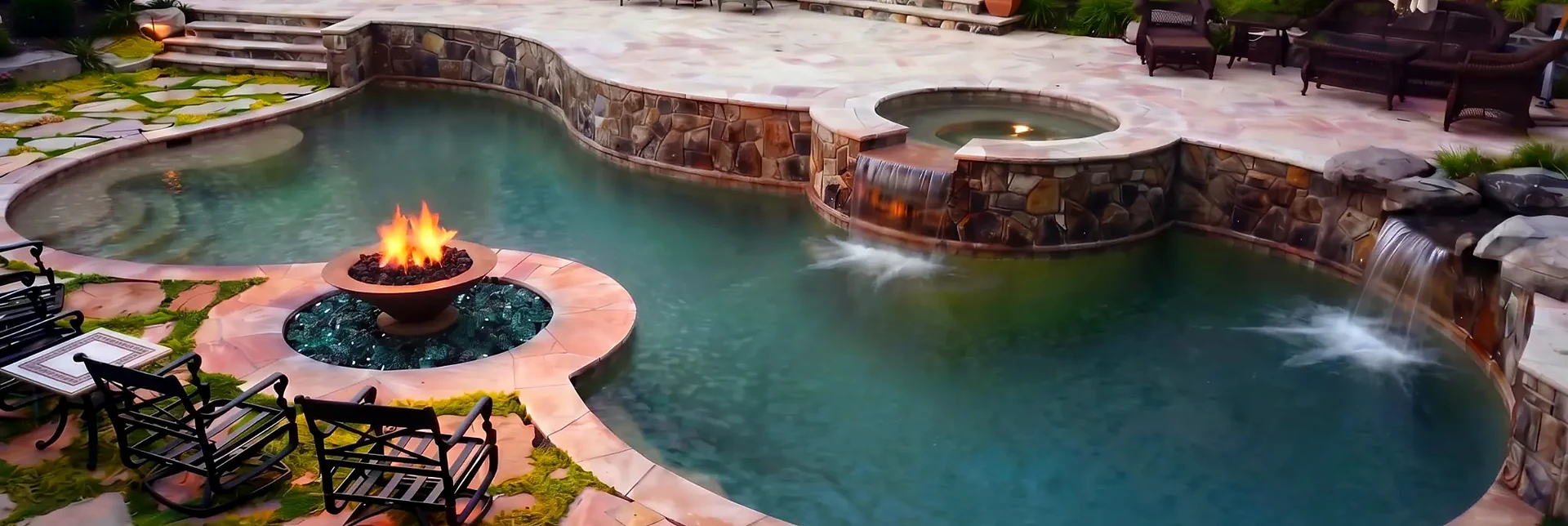
Selecting the right pool coping material for properties in southeastern Pennsylvania and western New Jersey requires balancing aesthetics, durability, and hydrology against a rigorous local climate. Freeze-thaw cycles, seasonal groundwater fluctuations, and variable soil types — from clay-rich yards in Bucks County to rocky substrates in parts of the Poconos — drive very specific performance needs. This article evaluates the best coping options through a practical, region-specific lens and provides a reproducible decision framework for homeowners, designers, and municipal plan reviewers.
Scott Payne Custom Pools focuses on long-term performance in cold-season climates. The analysis below defines selection criteria appropriate to southeastern Pennsylvania and western New Jersey, ranks materials by use case, identifies tradeoffs and installation considerations, and explains maintenance implications tied to local conditions, permitting, and typical construction seasons. The goal is to inform well-founded choices that minimize freeze-thaw damage and provide years of safe, attractive pool edges.
- Concrete-based coping (poured-in-place & precast concrete) and natural stone with proper drainage are top performers for freeze-thaw zones when installed with movement joints and adequate subbase drainage.
- Manufactured pavers and porcelain offer low-maintenance alternatives with predictable freeze-thaw resistance; choose high-density, frost-rated products and non-slip finishes.
- Avoid thin adhesive installations and porous stone types without densification; water ingress and differential movement drive the majority of coping failures here.
- Design decisions should consider soil type, surface water management, edge detail, and local township permit seasonality; allow for late-spring through early-fall construction windows when frost depth and groundwater are most manageable.
- SPCP recommends specifying coping systems with documented freeze-thaw ratings, clear jointing strategies, and contractor warranty terms tied to site drainage and movement accommodation.
For broader planning guidance, explore our Pool Types resource center.
Selection Criteria for Freeze-Thaw Climates
Every coping choice should be judged against a consistent set of technical and practical criteria. In southeastern Pennsylvania and western New Jersey, freeze-thaw resilience is the primary concern, but other factors materially affect long-term performance.
Key selection criteria include:
- Frost resistance and documented freeze-thaw ratings (ASTM C1026 or manufacturer equivalency)
- Porosity and water absorption (lower is better to limit freeze-induced spalling)
- Compressive strength and flexural behavior under thermal cycling
- Coefficient of thermal expansion relative to pool shell and adjacent materials
- Ability to accommodate movement: presence of control/movement joints and installation method
- Drainage strategy beneath and behind coping to prevent subbase saturation and heave
- Installation access and seasonal schedule constrained by local township permit processing and frost depth
- Maintenance needs and availability of matching repair materials locally
SPCP process: We recommend that every project begin with a site assessment documenting frost line depth, soil type (clay, silt, sand, rock), groundwater conditions, and expected exposure (sun/shade, deicing agents nearby). Specify coping systems only after confirming subgrade drainage and movement-joint strategy. This ensures manufacturer warranties and contractor warranties remain meaningful in freeze-thaw service.
Top Coping Options by Use Case
Rather than a single “best” material, the strongest choices depend on property-specific constraints: high ground water, heavy clay soils, tight site access, strict township aesthetic ordinances, or a need for low maintenance. This section groups the top coping materials by common use cases in the region.
Heavy Clay Soils and Poor Drainage
For sites with heavy clay and slow infiltration, coping systems that minimize water ingress and sit on a well-graded, drained subbase are preferred. Poured reinforced concrete coping or thick precast concrete units installed over a compacted stone drainage layer reduce the risk of differential movement. Concrete can be detailed with continuous ledgers and back-drain channels to route infiltrating water away from the shell.
Why it qualifies: Concrete is cohesive, can be reinforced, and tolerates thermal cycling when jointed properly. Drawbacks: surface finish and color can fade; poor mixes or inadequate jointing lead to cracking. Installation timing: aim for late spring through early fall when the ground is unfrozen to achieve stable compaction.
High Groundwater or Seasonal Standing Water
Porcelain or high-density engineered pavers specified for frost use often perform well over sites with variable groundwater because they are non-porous and can be installed on elevated, drained pedestals or a sloped compacted stone base. Their light weight and modularity also simplify replacing failed units without major demolition.
Why it qualifies: Low water absorption and consistent manufacturing reduce spalling risks. Drawbacks: thin units adhered directly to concrete can delaminate if the adhesive fails under freeze-thaw; selection requires frost-rated products and quality installers.
Historic or High-End Aesthetics
Natural stones (bluestone, granite, limestone) deliver a classic finish but vary widely in freeze-thaw behavior. Denser igneous stones such as granite or certain bluestones with low porosity are better suited than softer, porous limestones prone to spalling. Proper sealing and edge details that prevent capillary suction are critical.
Why it qualifies: Natural stone gives premium appearance and long life if the stone’s absorption rating and petrographic characteristics are favorable. Drawbacks: variability between quarried slabs, higher cost, and careful handling needed to avoid frost damage. Township reviews may require stone samples for approval in regulated communities.
Tight Access and Minimal Site Disturbance
Segmental concrete pavers or precast coping units are useful where heavy equipment access is limited. They allow staged installation and localized repairs without heavy demolition, and individual units can be replaced if freeze-thaw failure occurs.
Why it qualifies: Modular units are replaceable and reduce the need for prolonged excavation, helpful in narrow lots common in older boroughs. Drawbacks: many paver products require polymeric or flexible jointing and careful subbase compaction to prevent movement. Ensure the paver manufacturer rates products for frost exposure.
Poured-in-Place Concrete Coping
Poured-in-place (cast-in-place) concrete coping is a common choice in the region due to its adaptability to custom shapes, ability to integrate with bond beams, and capacity for reinforcement. When designed and executed properly, it provides good freeze-thaw resistance.
Design considerations: Specify a durable concrete mix with air entrainment (typically 4–7% air) to resist freeze-thaw damage per ACI recommendations. Include steel reinforcement or fiber reinforcement and provide control joints at regular intervals to relieve shrinkage and thermal stresses. Finally, slope the walking surface away from the pool (minimum 1/8" per foot) to discourage ponding.
Subbase and drainage: A well-compacted stone base with a geotextile separator and underdrain is essential on clay soils and sites with shallow groundwater. Where groundwater is present, incorporate a perforated drain at the base of the pool wall tied to a sump or daylighting outlet to avoid hydrostatic pressure behind the coping.
Installation pitfalls and maintenance: Cold-weather pours must be avoided when subgrade is frozen or air temperatures are below acceptable limits for curing; plan for frost-free windows. Surface sealers can extend appearance life but must be breathable and re-applied per manufacturer. Typical disadvantages are susceptibility to hairline cracking if jointing is omitted and potential for efflorescence in high-moisture environments.
Precast Concrete and Architectural Units
Precast coping units offer controlled factory quality, consistent finishes, and the ability to specify integral color and texture. Manufacturers often provide units rated for freeze-thaw exposure with documented testing, which simplifies specification for township and HOA reviews.
Advantages include uniform durability, controlled air entrainment, and fast field installation. Units can be set on a mortar bed, adhesive, or bearing on a mechanical ledge depending on design. For freeze-thaw climates, SPCP recommends bearing precast on continuous supports with weep holes and a drainedback detail to avoid trapping water behind units.
Possible drawbacks: Joints between units require flexible sealant and backer rod sized for expected movement; inadequate joint design leads to water infiltration and subsequent spalling. Precast units also have shipping and handling constraints on narrow roads in older neighborhoods in southeastern Pennsylvania.
Natural Stone: Which Types Work in Our Region
“Natural stone” is not a single material class; performance depends on grain, porosity, bedding planes, and quarry. In Southeastern PA and Western NJ, the commonly specified stones are bluestone (sandstone), granite, and certain dense limestones.
Bluestone: Dense quartzitic varieties with low porosity perform well if cut to a minimum thickness and installed with a drained subbase. Avoid highly fissile beds with pronounced cleavage that can delaminate under freeze-thaw.
Granite: Generally excellent for frost resistance due to low water absorption and high strength. Granite is heavier and more costly to install but offers excellent long-term service with proper jointing.
Limestone: Some limestones are too porous and susceptible to scaling; specify only those graded and tested for exterior freeze-thaw exposure. Ask for manufacturer or quarry freeze-thaw test results and local installer references.
Mitigations and detailing: Regardless of stone, specify moisture barrier membranes between the shell and stone when needed, through-slab weep channels, and movement joints every 4–8 feet depending on slab geometry. On clay soils, provide a continuous compacted stone subbase and consider geotechnical input for thicker base design.
Porcelain, Engineered Materials, and High-Density Pavers
Porcelain tile and engineered pavers have become popular for coping because of their low water absorption and wide range of colors and textures. Modern porcelain tile bodies rated for exterior use can exhibit water absorption values well below 0.5%, which reduces freeze-thaw risk significantly.
Installation notes: For coping, use frost-rated porcelain with a textured, non-slip finish. Install onto a rigid, properly cured concrete ledge with an approved thinset mortar for exterior porcelain or employ mechanical anchoring systems for pedestal installations. Ensure joints are filled with flexible sealants compatible with the tile and with UV resistance.
Drawbacks: Porcelain can be brittle if undersupported; thinset failures or differential movement between the tile and substrate cause cracking. Rigid pedestal systems can offset substrate movement by allowing independent support, but they require precise leveling and do not suit all edge profiles. For cold climates, verify that glues or adhesives used are rated for seasonal temperature swings.
Metal and Composite Coping Options
Metal copings (aluminum or stainless steel) and composite polymer copings are niche but growing options. Metals are durable and can create narrow profiles, but they require careful thermal break detailing because metal conducts heat rapidly and has a different thermal expansion coefficient than concrete.
Composite copings made of recycled polymers can be non-porous and resistant to freeze-thaw cycling. However, UV stability, long-term creep, and secure fastening must be evaluated. In areas where snow and freeze-thaw cycles are severe, composites with documented performance and warranties are preferable.
Drawbacks and considerations: Metal edges in chlorinated, saline, or de-icing salt-exposed environments may require grade-specific alloys (e.g., 316 stainless) to avoid corrosion. Composite products can deform under sustained loads or high heat; check manufacturer’s creep and thermal expansion data and detail connections to the pool shell to accommodate movement.
Jointing, Sealants, and Movement Accommodation
An effective coping system in freeze-thaw climates must accept that thermal and hydrologic forces create movement. The choice of movement joints, joint width, sealant type, and backer rod all materially affect long-term resilience.
Best practices include:
- Install control joints in concrete coping at spacing recommended by the concrete producer and ACI and at changes in geometry (curves, returns, thickness shifts).
- Provide 1/2" to 1" wide movement joints at transitions (coping-to-deck, coping-to-wall) filled with a two-part polyurethane or polysulfide sealant rated for exterior, submerged exposure when applicable.
- Use closed-cell backer rods to control sealant depth and allow proper sealant flex; leave a minimum and maximum sealant depth ratio per manufacturer guidance (commonly 1:2 depth-to-width).
- For stone or precast units, provide flexible adhesive or bedding mortar compatible with freeze-thaw cycles; avoid rigid cementitious adhesives without movement accommodation.
SPCP process: On each project, we specify joint patterns and sealant systems in contract documents and require installers to provide mock-up panels on-site to verify adhesion and movement performance before full installation.
Drainage, Subgrade and Hydrostatic Considerations
Drainage is arguably as important as the coping material itself. In areas with clay soils and perched water tables, subbase saturation and hydrostatic uplift are frequent contributors to coping failure. The coping edge creates a vulnerable plane where groundwater can accumulate and freeze.
Key drainage measures include:
- Provide a minimum 4–6" free-draining stone base beneath coping and adjacent deck areas, wrapped with geotextile where soil migration is a concern.
- Install perimeter drains and tie them into the property’s stormwater plan or a sump system; do not rely solely on surface slope to manage water in tight lots.
- Ensure positive slope away from the pool deck and coping (minimum 1/8"–1/4" per foot) to prevent standing water on the coping surface.
- Consider a stainless-steel or PVC weep system at the base of precast or stone copings to avoid trapping moisture between shell and coping assembly.
Pennsylvania notes: Township permits in many municipalities will require stormwater control and erosion mitigation during construction. Late-winter or early-spring construction can be complicated by high groundwater; schedule work for months when the water table is typically lower, and obtain any required erosion control permits before breaking ground.
Costs, Warranties, and Contractor Selection
Cost ranges vary widely by material, labor intensity, site access, and finishing. Natural stone and custom precast usually carry premium material and labor costs. Porcelain and engineered materials may be mid- to high-range but can offer predictable lifecycle costs due to lower maintenance.
Guidance on warranties and codes: Request product data sheets, freeze-thaw test reports, and contractor warranties. Manufacturers often publish freeze-thaw cycle results; where these are absent, insist on third-party testing or select an alternative material with documented performance. Warranties on materials and workmanship commonly exclude damage caused by poor drainage or improper movement joints; specify clear responsibilities in the contract.
Contractor selection: Hire installers experienced in local freeze-thaw detailing and who provide references for similar Pennsylvania or New Jersey projects. Township inspectors often examine coping attachments and control joint placement; local experience reduces permit friction and rework.
Seasonal Scheduling and Township Considerations
Construction timing matters. Many Pennsylvania municipalities effectively limit meaningful pool construction to frost-free months because excavation and subgrade compaction cannot be reliably performed when the frost line is active. Late fall and winter work increases risk of construction delays due to saturated soils and frozen subgrade.
Practical scheduling advice:
- Obtain township permits early in the calendar year; many townships have seasonal backlogs that delay start times.
- Plan major concrete pours and stone setting for late spring through early fall when frost risk is minimal and the subgrade can be compacted reliably.
- Coordinate with landscape and hardscape contractors to ensure surrounding grades are established and drainage outlets are available before coping installation.
SPCP process: We maintain a project schedule that aligns permitting, excavation, and coping installation to avoid winter pours and to secure project milestones before expected heavy rainfall seasons typical of the region.
Decision Framework: How to Choose the Right Coping
Use the following decision framework to select coping material based on site conditions and goals. The framework walks through five questions; answer each truthfully about the site and then match to the recommended material category.
- What is the dominant soil type and groundwater condition?
- High groundwater or perched systems → prioritize non-porous materials (porcelain, granite) and elevated/drained details.
- Heavy clay with poor drainage → heavy, reinforced concrete or precast with robust underdrain.
- Is the pool edge subject to strict aesthetic or HOA requirements?
- High-end historic aesthetic → dense natural stone (granite or quarried bluestone) specified with lab freeze-thaw data.
- Modern minimal aesthetic → metal/composite or porcelain for narrow, crisp profiles.
- How important is long-term maintenance and stain resistance?
- Low maintenance prioritized → porcelain or granite with minimal sealing needs.
- Periodic resealing acceptable → bluestone or concrete with breathable sealers.
- Is site access limited?
- Tight access → modular precast or segmental pavers that can be hand-carried and set in stages.
- Does the budget allow premium materials and extra drainage work?
- If yes → invest in granite or factory-tested precast plus comprehensive drainage and movement joints.
- If no → specify well-engineered poured concrete with air entrainment, reinforcement, and a good subbase; accept a simpler finish but follow detailing rigorously.
Use-case quick mapping table:
| Site Condition | Recommended Coping Type | Key Detailing Notes |
|---|---|---|
| High groundwater | Porcelain, granite, elevated precast | Drained support, weeps, non-porous materials |
| Heavy clay | Poured reinforced concrete, precast | Thick stone subbase, geotextile, compaction |
| Historic/landmark areas | Natural dense stone | Provide freeze-thaw test data, sample panels |
| Tight access | Modular precast or pavers | Hand-set units, flexible joints |
| Low maintenance desire | Porcelain, granite | Non-porous, minimal sealing |
Installation and Quality Control Checklist
Specify a QA checklist in the contract documents. The following items should be observed by the contractor and verified by the owner or an independent inspector before copings are accepted:
- Subgrade: Compaction report for stone subbase where applicable; geotextile installed if required.
- Drainage: Perimeter drains functioning and tied to outlet; weep holes installed at base of coping assemblies.
- Concrete: Mix design with specified air entrainment documented; control joint locations and spacing approved.
- Stone/Precast: Manufacturer freeze-thaw test reports and sample panel for color and jointing inspected on-site before final installation.
- Sealants: Approved product data sheets; mock-ups of joint detail observed through a full weather cycle if possible.
- Warranty: Written workmanship warranty and clarification of manufacturer responsibility for materials.
SPCP process: We employ mock-up panels that are reviewed and approved prior to full installation and require photographic documentation of subbase and drainage before concealing work. This preserves warranty validity and helps avoid disputes over hidden defects.
Maintenance and Long-Term Performance
Maintenance plans in freeze-thaw climates should focus on keeping joints intact, maintaining positive drainage, and avoiding ponding. Periodic sealant inspection annually, reapplication of breathable stone sealer every few years (if used), and prompt repair of cracked units will prevent progressive damage.
Specific local considerations: De-icing salts used on nearby driveways and sidewalks can splash or migrate to coping edges; rinse salted surfaces and consider splash guards. In boroughs that apply road salts heavily in winter, homeowners should keep pool water chemistry balanced and consider landscaping buffers to reduce salt spray onto coping materials.
Examples and Lessons from Regional Projects
In projects across southeastern Pennsylvania, common failure modes include coping spalling due to poor joint detailing, and delamination of thin pavers adhered directly to inadequately cured concrete ledges. Conversely, installations that combined a well-graded stone base, documented freeze-thaw-rated materials, flexible jointing, and robust drainage demonstrated long-term stability over multiple winters.
Lessons learned: Specify a sealed or drained joint at the pool shell/coping interface; avoid “no-joint” installations in freeze-prone climates. For stone, insist on specimen testing for absorption and cycle tests, because quarry variability can make a profound difference.
Body CTA
If you’re planning a new pool or coping renovation in southeastern Pennsylvania or western New Jersey and want a site-specific recommendation, contact Scott Payne Custom Pools to evaluate subgrade conditions, recommend material and jointing strategies, and help start your pool journey. We provide detailed specifications and construction schedules tailored for local frost lines, township permitting, and long-term freeze-thaw performance.
Keep Reading — Build Your Knowledge
- Problems With Fiberglass Pools in Pennsylvania: The Honest Truth
- Inground vs. Above Ground Pool: The Real Cost and Quality Comparison for Pennsylvania Homeowners
- Gunite vs Fiberglass Pools: The Right Choice for PA and NJ Suburbs
- Inground vs Above Ground Pools
- Discover Specialty Pool Types Tailored to Your Lifestyle
- Browse All Pool Types Articles →