
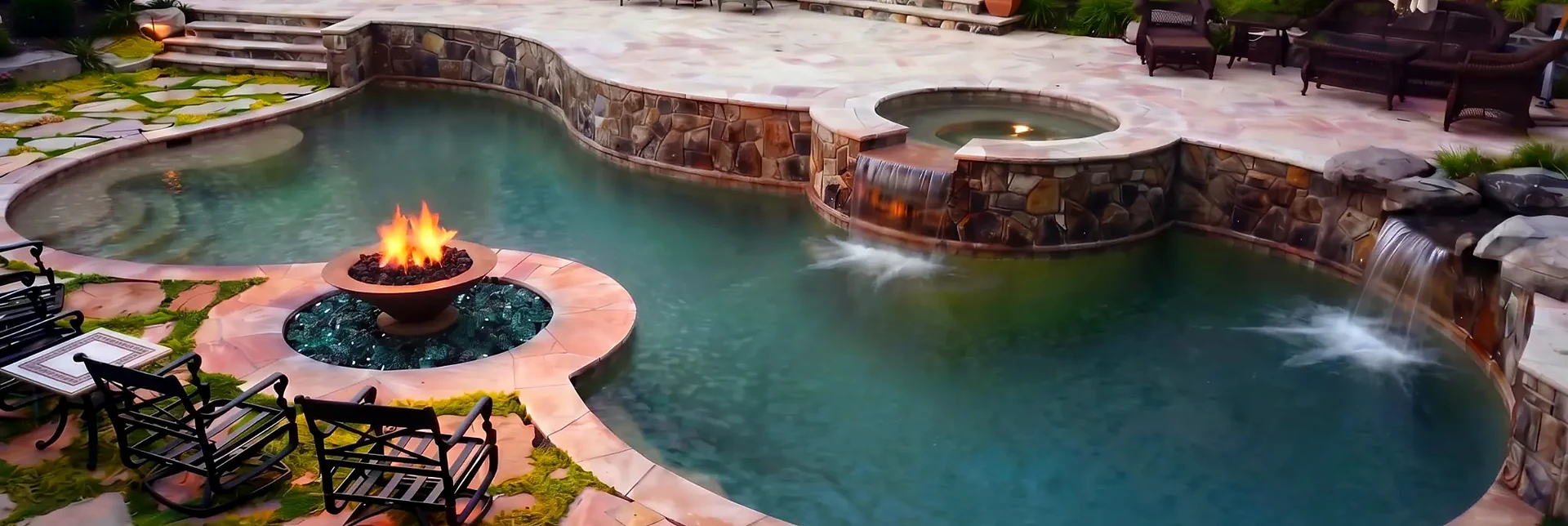
Choosing the right pool filter is one of the most impactful decisions a homeowner makes when designing or renovating a residential gunite pool. Filtration affects water clarity, equipment sizing, routine maintenance time, operating costs, and long-term equipment replacement schedules. For premium custom pools in southeastern Pennsylvania and western New Jersey, soil conditions, freeze-thaw cycles, local code requirements, and seasonal construction windows also influence which filtration technology makes the most sense.
This article explains how cartridge, diatomaceous earth (DE), and sand filters work, compares them across the key criteria homeowners and designers use to decide, and examines tradeoffs specific to the Mid-Atlantic climate and local site conditions. The goal is not to declare a single “best” filter but to equip homeowners and pool professionals with the information necessary to select the right filter for a specific property, usage pattern, and budget.
- Cartridge filters deliver excellent water clarity and low energy pressure but require periodic cartridge replacement and careful backwashing avoidance; good for low-maintenance footprints and small-to-medium pools.
- DE filters provide the finest mechanical filtration and fastest turnarounds for high-use or heavy-debris pools but involve handling DE powder and more frequent backwashing or regeneration cycles.
- Sand filters are rugged, lower-cost upfront, and forgiving with variable water quality but provide the lowest fine-particle removal and typically require higher turnover or supplemental filtration for spa-quality clarity.
- Local Pennsylvania factors—freeze-thaw, clay/rock soils, municipal permits, and drainage—affect equipment location, winterization practices, and contractor selection; plan for accessible equipment pads and controlled drainage routes.
- Consider lifecycle cost (energy + media replacement + labor), homeowner skill to maintain the system, and aesthetic/integration goals when choosing; hybrid solutions (e.g., sand + cartridge in secondary loop, or DE pre-filtering) are viable.
For broader planning guidance, explore our Pool Decisions resource center.
How Each Filter Type Works: Basics and Practical Implications
Understanding the mechanics behind each filter type clarifies why they differ in performance and maintenance. The three mainstream options—cartridge, DE, and sand—use distinct media and flow paths to remove solids.
Cartridge Filters: Surface Area and Low Pressure
Cartridge filters use pleated fabric cartridges made from polyester or similar materials. Water flows from the outside of each pleat to the inside, trapping particulates on the pleat surface. Because the pleated media supplies very high surface area in a compact canister, cartridge filters often operate at lower pressure for a given flow and offer strong removal of medium-sized particles (down to around 10–15 microns for common residential cartridges).
Cartridges are not backwashed. Instead, the homeowner or service technician removes the cartridge(s) for rinsing or replacement. Practically, this reduces water and chemical loss associated with backwashing but requires space for cartridge handling and time for cleaning. Cartridges also age and must be replaced periodically; the replacement interval depends on water chemistry, debris load, and how thoroughly they are rinsed.
DE Filters: Microscopic Filtration with Powdered Media
Diatomaceous earth filters use a layer of porous fossilized diatom particles that coat internal grids or fingers. DE provides the finest mechanical filtration of the three common types—down to roughly 2–5 microns—because the powder creates many microscopic channels that trap very small particles. DE systems can produce very clear water with lower chemical demand in some situations, and they are popular for high-clarity applications.
DE systems require periodic backwashing and recharging with fresh DE powder. Handling DE requires caution regarding dust mitigation and appropriate disposal of backwash waste—important when local municipalities regulate wastewater. DE grids are also more delicate than a sand bed and can be damaged by improper servicing or freezing.
Sand Filters: Simplicity and Durability
Sand filters pass flow through a bed of specially graded sand—typically 0.45–0.55 mm silica or alternative engineered media. Particles are trapped within the sand matrix, and clean water passes through. Sand filters are commonly rated to remove particles down to roughly 20–40 microns, making them less effective on fine silt or microalgae without auxiliary treatment.
Sand filters are backwashed to flush trapped debris to waste and then reset with a rinse cycle. Sand lasts several years before replacement. Sand filters are tolerant of variable water quality and rough handling, which makes them a durable choice for many traditional installations.
Performance Criteria Comparison
Below is a side-by-side comparison of the three filter types across the primary technical and practical criteria homeowners evaluate. The table highlights typical characteristics in residential pool applications; specific manufacturer claims should be checked and field-tested by qualified installers.
| Criterion | Cartridge | DE | Sand |
|---|---|---|---|
| Typical Particle Size Capture | ~10–15 microns | ~2–5 microns | ~20–40 microns |
| Initial Cost (equipment only) | Moderate | Moderate–High | Low–Moderate |
| Operating Pressure | Lower | Moderate | Higher |
| Water/Chemical Loss (backwash) | Low | Moderate (requires backwash) | High (frequent backwashing) |
| Routine Maintenance Labor | Medium (cartridge cleaning) | Medium–High (DE recharge & backwash) | Low–Medium (backwash) |
| Media Replacement Frequency | 12–36 months (cartridge dependent) | DE powder per backwash; grids replaced rarely | 5–10 years sand |
| Debris Types Best Handled | Fine organic debris, leaves; struggles with heavy loads if cartridges clog | Fine dust, pollen, microparticles | Large debris and heavy loads; less fine clarity |
| Failure Modes | Rips/tears, biological fouling | Clogged grids, improper recharge, DE dust | Channeling, bed compaction over years |
The table simplifies a complex set of tradeoffs; real installations vary with pump size, plumbing layout, and additional equipment such as auxiliary filters, clarifiers, or UV/ozone systems.
Lifecycle Cost: Energy, Replacement, and Service
Owners should assess total lifecycle cost across at least a 10–15 year planning horizon. That includes initial purchase and installation, ongoing energy consumption (driven by system pressure and run hours), consumables, service labor, and eventual media replacement or filter replacement.
Because cartridge filters typically operate at lower pressure for given flow rates, they can reduce pump energy use slightly relative to high-pressure sand systems. That said, energy savings depend more on pump selection (variable-speed vs single-speed) and plumbing optimization than filter choice alone. A correctly sized variable-speed pump and hydraulically optimized plumbing will produce greater energy savings than switching filter types absent other changes.
Consumables vary:
- Cartridges — replacement cartridges every 1–3 years depending on usage and water quality; aftermarket vs OEM pricing varies.
- DE — ongoing purchase of DE powder for recharging; small quantities per recharge but recurring cost and disposal consideration.
- Sand — low recurring media cost; sand typically replaced every 5–10 years but labor to change is non-trivial.
Labor is an important hidden cost. Many homeowners pay a service company for spring startup, weekly or biweekly maintenance during the season, and winterization. Filters that require frequent disassembly or delicate handling (DE grids) may increase service time and cost compared with a simple sand backwash. Cartridge cleaning by homeowners reduces service bills but requires time and comfortable working space near the equipment pad.
Maintenance Tasks and Typical Intervals
Maintenance frequency depends on pool usage, local trees and pollen, rainfall, and the chosen filter. The following are typical tasks and intervals for each filter type, with the caveat that reactive maintenance will be required after storms or heavy bather loads.
Cartridge
Cartridges should be rinsed every 2–8 weeks depending on debris load. If backpressure rises significantly (manufacturer PSI range), cleaning is required. Deep-cleaning with a low-pH media cleaner or enzymatic soak is recommended every 3–12 months depending on buildup. Cartridges generally need replacement every 12–36 months for residential pools; frequency increases with poor water balance, sunscreen oils, or heavy organic loads.
DE
DE filters need to be backwashed when pressure rises 8–10 psi above starting pressure, then recharged with DE powder according to the filter’s grid capacity. Many systems also need periodic grid inspection and occasional grid replacement over many years if torn or fouled. Because DE powder is fine, owners should use containment and avoid inhalation when handling. Municipal rules in Pennsylvania sometimes limit backwash discharge; plan for discharge routing to sanitary sewer or certified disposal when required.
Sand
Sand filters need backwashing when pressure increases 8–10 psi above starting pressure as well, followed by a rinse cycle. Over the years, the sand bed may form channeling, and at that point flow bypasses portions of the bed, reducing performance; sand replacement every 5–10 years typically restores performance. Some owners add a small cartridge skimmer or a secondary filter to capture fine fines sand misses.
Pennsylvania and New Jersey Site-Specific Considerations
In southeastern Pennsylvania and western New Jersey, several local factors affect filter selection, equipment location, and service practices. Pools here face cold winters with frequent freeze-thaw and a mixture of clay and rocky soils. Municipal codes and township permit processes also vary widely—sometimes dictating equipment pad setbacks, winterization practices, and wastewater discharge.
Key local considerations include:
- Freeze-thaw cycles: Equipment must be winterized and, where possible, located in frost-protected pads or inside small equipment rooms. DE grids are more susceptible to freeze damage if left wet and exposed; sand beds tolerate freezing better when properly drained. Cartridges must be removed and stored dry when the pump is winterized.
- Soil and groundwater: Clay soils can hold surface runoff, creating wet equipment pads and complicating backwash drainage. Rocky soils may increase excavation costs and influence equipment placement. High groundwater levels may require elevated pads or engineered drainage to avoid equipment flooding—especially important for DE systems where grids should remain dry during winter.
- Municipal permits and waste discharge: Several townships and boroughs have explicit rules about draining pool water or discharging backwash. DE backwash may be considered a pollutant and require containment. Confirm township codes and obtain any required wastewater permits before finalizing the filtration plan.
- Access and seasonal construction: Short construction windows and tight access in older neighborhoods can limit equipment size and placement. Cartridge filters are compact but require working clearance for cartridge removal. Plan equipment pad location with the installer to ensure serviceability year-round.
Because conditions vary widely across properties—older houses on small lots in historic boroughs versus new construction on suburban acreage—the right choice depends on the parcel. A sand filter might be a resilient, low-maintenance choice for a remote pool with limited service access; DE may be preferable for a high-use family pool on a parcel with easy equipment-room access and approved discharge options.
Installation and Sizing Considerations
Correct filter sizing is critical regardless of filter type. Oversized filters lose cost efficiency, while undersized filters can increase system pressure and decrease filtration effectiveness. Sizing should consider pump flow, planned turnover rate, pool volume, planned features (spa, vanishing edge), and local code turnover requirements.
Turnover recommendations often range from 6–8 hours for swimming pools but vary with local code and intended use. The filter must be rated for the pump’s maximum flow at expected head; conversely, the pump should be sized to the required turnover and optimized for energy efficiency. Variable-speed pumps allow lower flows for filtration cycles and higher flows for cleaning or waterfall features, but they demand a filter that functions efficiently across that flow range.
Plumbing layout matters: short runs and properly sloped suction lines reduce strain on the pump and reduce risk of air entry. In Pennsylvania’s freeze-prone areas, locate equipment to minimize exposed plumbing runs that could freeze—inside a mechanical shed or within frost-protected enclosures where practical. Install isolation valves and make provisions for winterizing so water can be removed or antifreeze applied per code and manufacturer guidance.
Health, Safety, Codes, and Environmental Considerations
Health and safety topics intersect with filter choice: DE powder handling, backwash discharge, and the potential for lost media reaching downstream wetlands or storm systems. Homeowners should follow product labels and local rules when handling DE or disposing of backwash. Many municipalities forbid discharge to storm drains.
Codes also affect equipment location and fencing requirements. Electrical work for pumps and automation must follow NEC and local amendments; a licensed electrician should do electrical connections. When building a pool in Pennsylvania or New Jersey, the permit application may request equipment diagrams, grading and drainage plans, and proof of proper wastewater handling for backwash. Be prepared to show how backwash will be routed to the sanitary sewer (if allowed) or to a containment and disposal solution.
Tradeoffs, Best-Fit, and Poor-Fit Homeowner Profiles
No single filter is superior in every situation. Below are profiles and scenarios where each option is likely to fit well or poorly.
Cartridge Filters — Best-fit
- Homeowners who want strong clarity with reduced water wastage from backwashing.
- Properties where equipment access and space allow frequent cartridge removal and cleaning.
- Pools with moderate bather load and limited heavy debris (e.g., minimal overhanging trees).
- Owners who perform part of their own maintenance and prefer fewer wastewater/discharge complications.
Cartridge Filters — Poor-fit
Cartridge systems can be less suitable where heavy debris loads are routine (e.g., pools beneath dense tree canopies), where homeowners cannot or will not perform cartridge rinsing, or where very fine particulate removal (silty groundwater intrusion) is required without supplemental treatment.
DE Filters — Best-fit
- Homeowners seeking the finest mechanical filtration for theatrical clarity, high-use pools, or commercial-style clarity in a residential setting.
- Properties with easy equipment room access and approved backwash/disposal paths.
- Pools subject to heavy microscopic loads (pollen, dust) where additional chemical demand would otherwise increase.
DE Filters — Poor-fit
DE is less suitable where backwash discharge restrictions make recharging impractical, where operators are uncomfortable handling powder, or where freeze exposure risks grid damage and municipalities restrict outdoor equipment rooms without proper winter-proofing.
Sand Filters — Best-fit
- Owners seeking lowest upfront media cost and forgiving operation in variable-quality water.
- Remote properties where minimal service intervention is desired and occasional backwashing is acceptable.
- Situations where heavy debris is routine and mechanical robustness is valued over the absolute finest clarity.
Sand Filters — Poor-fit
Sand filters struggle where ultra-fine clarity is a priority (competitive swimming, high-end visual pools) without additional polishing filters, or where water conservation and minimizing backwash are top priorities.
Supplemental and Hybrid Strategies
Many modern residential systems combine technologies to balance clarity, maintenance, and cost. Examples include:
- Primary sand filter with a cartridge or pleated cartridge in a secondary loop to polish fines and reduce sand’s limitations.
- DE pre-filter or separate skimmer-based cartridge to reduce load on the DE grids and extend recharge intervals.
- Use of clarifiers, flocculants, UV or ozone systems to reduce particulate load on mechanical filters and lower chemical consumption.
Hybrid approaches are particularly useful in Pennsylvania where pollen seasons and autumn leaf fall impose variable but intense debris loads. Polishing filters can reduce the burden on the main filter, reduce backwash frequency, and improve visual clarity.
Practical Guidance for Selection and Contracting
When selecting a filter, the homeowner should:
- Determine realistic usage patterns—average bather load, frequency of entertaining, presence of pets, and proximity to trees or construction dust.
- Evaluate equipment pad location for service access, freeze protection, and local code requirements for drainage and setback.
- Request lifecycle cost estimates from contractors including energy modeling with a proposed pump and anticipated media replacement schedules for 10–15 years.
- Ask contractors to provide written guidance on winterization procedures specific to the chosen filter and local climate risks.
- Confirm how backwash will be handled and whether township permits or sewer authority approvals are required.
We recommend that homeowners get at least two competitive bids with equal scopes of work and a clear parts/spec list. SPCP process recommendations: we advise using a licensed pool contractor for equipment installation; contractors should provide manufacturer warranty documentation and a written maintenance plan specific to the chosen filter. SPCP will perform a site evaluation that considers soil, groundwater, and permit constraints before recommending a filter package.
Case Studies and Examples
Example 1: A new gunite pool on a 1-acre suburban lot with mature oaks in Chester County, PA. Heavy autumn leaf fall suggested a cartridge filter combined with a robust skimmer-strainer prefilter to catch leaves before cartridges clog. Equipment was sited in a small mechanical enclosure to protect cartridges from freeze damage and to provide an accessible workspace for rinsing and replacement.
Example 2: A high-use family pool in a western New Jersey township near farmland where dust and pollen loads are seasonal and heavy. The owner selected a DE filter because the finest particle capture helped maintain visibility despite frequent bather loads. The installation included a containment drain routed to the sanitary sewer (per township approval) and a covered equipment room to protect grids from winter exposure.
Example 3: A rural estate with limited contractor access and periodic maintenance visits. The owner selected a sand filter for its durability and low hands-on maintenance. To address the perceived loss of fine clarity, the contractor added a cartridge-based polishing filter on the return line and scheduled annual sand replacement during the off-season.
Decision Checklist Before Purchase or Upgrade
Use this checklist to make sure key items are considered before signing a contract:
- Volume and intended turnover rate
- Pump type: variable-speed strongly preferred for energy optimization
- Debris sources: trees, birds, construction dust, nearby fields
- Equipment pad location: access, frost protection, drainage routes
- Municipal permit & backwash disposal requirements
- Owner maintenance willingness and ability
- Lifestyle: frequency of use, clarity expectations
- Budget: upfront vs lifecycle cost tolerance
Bring property-specific photos and, where possible, soil reports or previous permit documents to the contractor meetings. These items speed accurate recommendations and realistic bids.
Keep Reading — Build Your Knowledge
- LUXURY POOL DESIGN IN RIDLEY PARK, PA — CUSTOM INGROUND POOLS
- LUXURY POOL DESIGN IN SELLERSVILLE, PA — CUSTOM INGROUND POOLS
- LUXURY POOL DESIGN IN DARBY, PA — CUSTOM INGROUND POOLS
- LUXURY POOL DESIGN IN YEADON, PA — CUSTOM INGROUND POOLS
- LUXURY POOL DESIGN IN TEWKSBURY TOWNSHIP, NJ — CUSTOM INGROUND POOLS
- Browse All Pool Decisions Articles →
Body CTA
If you're planning a new gunite pool or considering an equipment upgrade in southeastern Pennsylvania or western New Jersey, contact Scott Payne Custom Pools to discuss filter choices in the context of your parcel, code requirements, and desired maintenance profile. Start the conversation today and start your pool journey with a site-specific evaluation and written recommendation.