
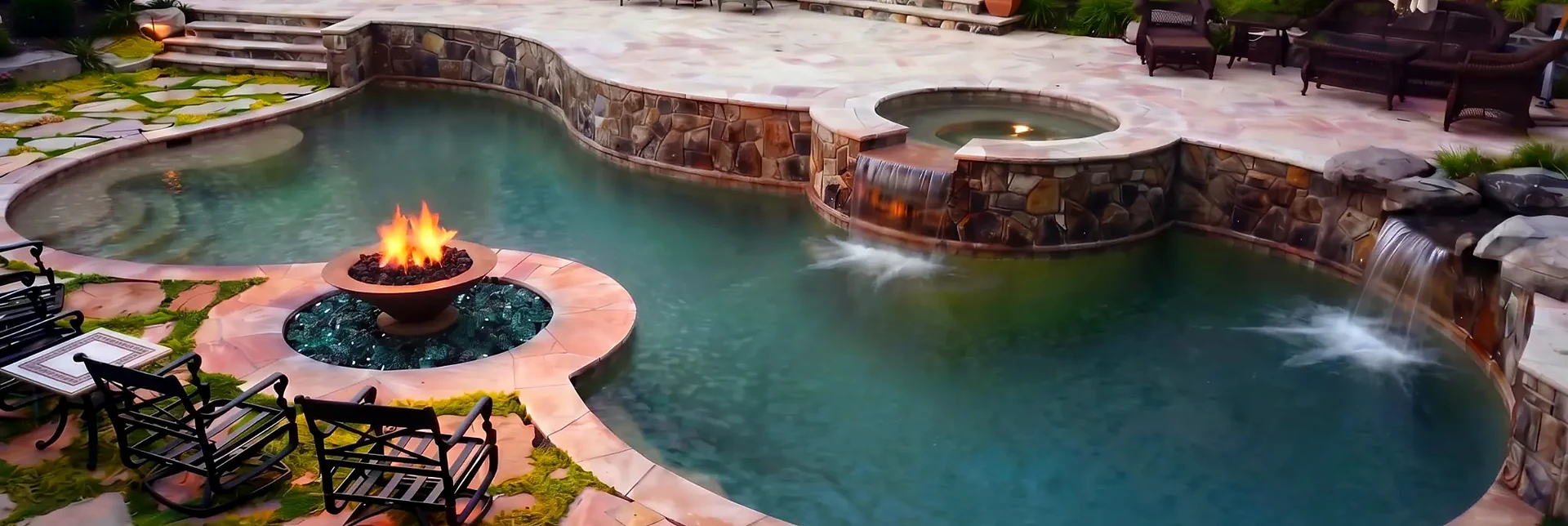
Groundwater mitigation is a common and sometimes costly component of building a gunite (shotcrete) pool in Pennsylvania. Because many properties in southeastern Pennsylvania and western New Jersey sit on clay-rich soils, shale, or fractured bedrock with a high seasonal water table, builders frequently encounter groundwater issues that must be addressed to protect structural integrity, ensure proper drainage, and maintain long-term pool performance. This article explains typical costs, line items, risk drivers, and realistic scenarios so homeowners and landscape professionals can plan budgets and make informed decisions.
We describe what groundwater mitigation covers, show typical low/mid/high cost scenarios for Pennsylvania properties, list the detailed cost drivers, and explain where estimates commonly change after engineering, test pits, or excavation. Readers will find information specific to regional considerations—freeze-thaw cycles, township permitting, clay soils and rock, seasonal access restrictions, and contractor strategies—without presuming uniform site conditions.
- Groundwater mitigation for gunite pools in Pennsylvania typically adds $4,000–$45,000 to construction costs depending on soil, depth, and required systems.
- Common mitigation approaches include perimeter drains, sump-and-pump systems, geotechnical drainage blankets, underdrain gravel layers, and shotcrete admixtures; each has distinct line-item costs and maintenance needs.
- Low-risk sites (well-draining soils, low water table) may need only gravel underdrains; moderate- to high-risk sites often require engineered systems, mechanical pumps, or dewatering during construction.
- Estimates frequently change after test pits, geotechnical reports, or encountering ledge/large boulders—expect contingency budgets and discussion with engineers and township officials.
For broader planning guidance, explore our Pool Costs resource center.
Why groundwater mitigation matters for gunite pools in Pennsylvania
Groundwater exerts hydrostatic pressure on the pool shell. If unmitigated, buoyant forces can cause flotation, cracking, or compromise of tile and coping where water pressure acts against a drained or partially filled pool. Pennsylvania's varied geology—glacial tills, clay-rich uplands, and pockets of fractured bedrock—can produce seasonal water tables that rise rapidly during spring thaw and heavy rains. The freeze-thaw cycle is also relevant: saturated soils that freeze can heave, and thawing produces large transient flows into excavations.
Groundwater mitigation is not a cosmetic add-on. It is an element of structural risk management. Proper drainage and reliable mechanical systems reduce the chance of structural movements, protect interior finishes, and limit ongoing maintenance costs. Local building departments and engineering standards may require specific details for pools near high-water-table areas, and insurance carriers sometimes inquire about mitigation measures when issuing coverage for in-ground pools.
Common mitigation strategies and what they cost
Contractors usually select one or more mitigation strategies depending on site conditions. The most common systems are: perimeter (exterior) drains, internal underdrain/gravel layers, sump-and-pump systems, geotextile-wrapped drain blankets, and temporary construction dewatering. Each approach has different material and labor inputs, service life expectations, and maintenance implications.
Below are typical line items with rough cost ranges in Pennsylvania as of mid-2026. Prices vary by county, contractor, site access, and project complexity.
- Perimeter (exterior) French drain: 6–12" perforated pipe in aggregate behind pool shell to daylight or to a sump—$2,000–$12,000.
- Underdrain/gravel layer under gunite shell (pea gravel, filter fabric)—$1,200–$6,000.
- Sump pit and submersible pump with discharge piping and check valve—$1,800–$9,500.
- Geocomposite drainage blanket or wrapped geotextile for high-flow soils—$3,000–$15,000.
- Temporary dewatering (wellpoints or pumps during excavation and shotcrete)—$1,200–$8,000 for short jobs; higher for long seasons.
- Rock removal and ledge blasting: significant variable—$10,000–$60,000+ when heavy excavation or blasting is necessary.
- Engineering and permitting: geotechnical reports, engineered drain details, and township review—$1,200–$8,000.
Detailed cost table and line items
The table below consolidates typical line-item ranges so homeowners can compare alternatives. These ranges are regional estimates and reflect labor/material differences across southeastern Pennsylvania and western New Jersey.
| Item | Typical Low | Typical Mid | Typical High | Notes |
|---|---|---|---|---|
| Test pits / geotechnical borings | $600 | $1,500 | $4,000 | Two–four borings or several test pits recommended for uncertain sites. |
| Underdrain gravel & fabric (entire shell footprint) | $1,200 | $3,000 | $6,000 | Price depends on depth, import/export of material, and compaction needs. |
| Perimeter exterior French drain | $2,000 | $6,000 | $12,000 | Includes pipe, filter stone, excavation and daylighting or piping to a sump. |
| Sump pit + pump + controls | $1,800 | $4,500 | $9,500 | Includes basin, pump, discharge, check valve, and simple control. Backup systems add cost. |
| Geocomposite drainage blanket | $3,000 | $7,000 | $15,000 | Used with high-flow soils or where gravel is impractical. |
| Temporary dewatering (construction) | $1,200 | $3,500 | $8,000 | Duration and number of pumps increase cost; winter work can add expense. |
| Drain tie-in to municipal storm sewer | $1,500 | $5,000 | $15,000 | Township permits, traffic control, and distance to existing structures drive cost. |
| Rock removal / ledge excavation | $10,000 | $25,000 | $60,000+ | Highly variable; sometimes requires blasting or heavy rock breakers. |
| Engineering, shop drawings, and permit coordination | $1,200 | $3,000 | $8,000 | May be required by municipalities or for lender/insurance documentation. |
Low, mid, and high groundwater-mitigation scenarios for Pennsylvania
To help with budgeting, here are three realistic scenarios reflecting site conditions common to our service area. All scenarios assume a typical 14' x 28' pool footprint and gunite shell. Prices are illustrative and exclude the base pool shell cost.
Low-risk scenario (well-draining soils, shallow excavation)
Conditions: Sandy loam or well-draining fill, water table below excavation depth, easy access for equipment, no ledge. Mitigation: basic gravel underdrain, filter fabric, and slope/drainage away from pool. No sump pump required if surface grading and yard drains are acceptable.
Estimated cost range: $2,000–$6,500. Typical line items: underdrain gravel and fabric ($1,200–$3,000), minor perimeter drain to yard ($800–$2,500), geotechnical recommendation but no heavy engineering ($200–$1,000).
Mid-risk scenario (clayey soils, seasonal high water table)
Conditions: Heavy clay or silty soils, water table near pool elevation in spring, moderate site access. Mitigation: underdrain gravel blanket, perimeter French drain tied to a sump, single sump pump with alarms, and geotextile-wrapped aggregate to limit fines migration. Temporary dewatering may be used during shotcrete.
Estimated cost range: $7,500–$22,000. Typical line items: underdrain ($2,400–$5,500), perimeter drain ($3,500–$8,000), sump and pump ($2,000–$6,500), temporary dewatering ($1,200–$3,000), geotechnical report ($700–$2,500).
High-risk scenario (rock, ledge, perched water, poor access)
Conditions: Fractured bedrock or ledge in the excavation, perched water zones, steep access or tight yards requiring smaller machinery and more labor; close setbacks to structures. Mitigation: engineered drainage blanket, multiple sumps with redundant pumps, rock removal or blasting, discharge piping to storm sewer or low point requiring township approvals, full-time dewatering pumps during construction, and extensive engineering documentation.
Estimated cost range: $25,000–$75,000+. Typical line items: rock removal ($10,000–$60,000+), engineered geocomposite and drains ($7,000–$18,000), multiple sump/pump systems ($4,000–$12,000), permit/engineering ($2,000–$8,000), storm sewer tie-in ($5,000–$20,000+).
How engineering, test pits, and excavation change estimates
Initial site visits provide a general idea of groundwater risk, but definitive budgets require subsurface information. Test pits and geotechnical borings reveal the soil profile, depth to seasonal water table, presence of confined aquifers, and rock layers. Engineers use this information to recommend permeability rates for drainage layers, spacing for sump pumps, required pipe diameters, and structural details to resist uplift.
Common estimate changes after geotechnical work:
- Discovery of fractured rock or ledge often increases cost dramatically due to rock removal or blasting and may require redesign of drain routing.
- Higher-than-expected groundwater levels may shift a project from passive drainage to mechanical sump systems.
- Unstable soils (sensitive clays) can necessitate thicker underdrains, geotextile separation, and more extensive surface drainage—raising both materials and labor costs.
- Unexpected obstructions (old foundations, large boulders, buried utilities) typically create change orders and schedule impacts.
Because of these uncertainties, experienced contractors and engineering consultants build contingencies into initial budgets and clarify the triggers for cost changes in their proposals.
Pennsylvania-specific considerations that affect pricing
Several regional factors in southeastern Pennsylvania and western New Jersey make groundwater mitigation distinct from other parts of the country.
- Freeze-thaw cycles: Repeated freezing and thawing expand and contract soils, increasing movement in saturated ground. Drainage and pump systems need frost protection (burial depth, insulated conduits) or freeze-resistant components, which raises material costs.
- Clay-dominated soils: Many suburban and rural lots contain residual clays that reduce infiltration and create perched water tables. Clay requires larger aggregate drains and more robust geotextiles to prevent clogging and fines migration.
- Variable bedrock: Schist, shale, and other Pennsylvania bedrock can be shallow and discontinuous. Encountering ledge increases excavation costs and often dictates engineered mitigation solutions.
- Township permitting and stormwater rules: Municipalities may require engineered drain details, approved discharge points, erosion control, and pipe ties to authorized stormwater inlets. Fees and time for approvals can add cost and schedule risk.
- Seasonal access and scheduling: Spring thaw and heavy rains raise water tables; late-winter and early-spring construction often requires more extensive temporary dewatering. Conversely, tight winter conditions increase equipment mobilization costs and extend timelines.
Operational and maintenance cost drivers homeowners should plan for
Mitigation systems are not “install and forget.” Sump pumps require periodic inspection or replacement, check valves and electrical controls can fail, and geotextile-wrapped drains may collect fines over years. Maintenance costs are typically modest relative to installation but should be included in lifecycle plans.
Typical operational items and approximate annual ranges:
- Sump pump electricity and basic maintenance: $75–$350/year depending on run time and local energy costs.
- Pump replacement every 7–12 years (submersible pumps): $450–$1,500 plus labor.
- Alarm systems and battery backups: $100–$600 initial; batteries replaced periodically.
- Periodic inspection of outlet points, discharge piping, and frost protection: $150–$500 per visit if contracted.
Choosing systems: passive vs. active mitigation
Passive systems rely on gravity: properly graded perimeter drains, rock blankets, and daylighted pipes. They are lower cost to operate and maintain but depend on available outlet elevations and site topology. Active systems use pumps and controls to remove groundwater from sumps—necessary when no gravity outlet exists or groundwater pressures are high.
Decision factors include:
- Available gravity outlet vs. distance to storm sewer or roadside ditch.
- Seasonal height of the water table and expected hydrostatic pressures.
- Risk tolerance and willingness to accept mechanical systems with their lifetime costs.
- Local codes and homeowner association rules about discharge locations.
Passive solutions are preferable when feasible, but engineers sometimes specify mechanical redundancy (dual pumps, battery backups, alarm systems) where pool failure would be catastrophic or liability is a concern.
How access, landscaping, and neighboring structures affect price
Tight access increases labor and equipment costs. Smaller yards often require mini-excavators, hand labor, and additional installation time compared with a wide-open site that accommodates full-size machines. Landscaping removal and restoration (patios, driveways, trees) are separate line items but directly affect drain installation complexity.
Proximity to existing foundations, retaining walls, septic fields, and utilities often requires engineered details to avoid undermining structures. Contractors must sometimes deploy temporary sheeting or bracing, which increases both expense and schedule length. If a drain must be run near an adjacent structure, engineered wall drains and tie-ins may be necessary to meet township review requirements.
Typical contract language and scope items homeowners should request
When comparing proposals, homeowners should insist on line-item clarity for groundwater mitigation. Useful contract elements include:
- Clear description of assumed soil and water conditions that underpin the quoted price.
- Specific line items for test pits/borings and an itemized list of mitigation systems (pipe size/type, aggregate specifications, pump model, controls, alarm systems).
- Allowance or contingency clause for rock removal with a stated unit price per cubic yard or per hour—this prevents open-ended cost surprises.
- Warranty statements for installed components (pumps, basins) and an explanation of what the pool shell warranty covers regarding uplift or groundwater intrusion.
- Coordination tasks for permits and inspections with township agencies spelled out and the party responsible for fees and resubmittals made explicit.
Where estimates commonly change after excavation
Contractors and homeowners should expect three common triggers for estimate changes:
- Unanticipated ledge or large boulders requiring rock-breaking or blasting.
- Higher-than-expected groundwater that moves the design from passive drains to mechanical pumping or requires additional sump basins.
- Discovery of buried obstructions, undocumented utilities, or environmental concerns requiring remediation or relocation.
Good proposals include unit rates for these contingencies and a clear process for owner approval before work proceeds. That transparency reduces disputes and allows owners to make budgeted decisions (for example, whether to invest in a more conservative engineered solution).
Recommended SPCP process for Scott Payne Custom Pools
SPCP stands for Site Preliminary, Consult, and Plan. When Scott Payne Custom Pools evaluates a property for groundwater mitigation, we follow a stepwise process to minimize surprises and align expectations. We present it here in first-person plural only to identify the firm’s internal standard approach:
- Site Preliminary: We perform a guided walkover, identify visible indicators (saturated areas, springs, seepage), and document access constraints.
- Consult: We propose initial, costed mitigation options based on visual assessment and historical knowledge of local soils; we describe the likely need for test pits/borings when appropriate.
- Plan: When required, we coordinate geotechnical borings, produce engineered drain details, and provide a final, itemized mitigation budget with contingency allowances and schedule implications.
Where mitigation is implemented, Scott Payne Custom Pools typically includes training for homeowners on routine pump inspection and alarm testing, and provides documentation for township inspections or future buyers.
Financing and budget planning tips
Because groundwater mitigation costs can be large and sometimes unexpected, homeowners should set aside a contingency when planning pool budgets. Common guidance is a 10–20% contingency for typical projects, and 20–40% for sites with unknown geologic conditions or known ledge. For many projects, it makes sense to budget mitigation line-items separately from the base pool price so the owner can clearly see the cost drivers.
Homeowners may also explore financing options that roll mitigation costs into construction loans or home equity lines of credit. Contractors and engineers can help prioritize mitigation steps to match budget constraints—such as installing a passive gravel underdrain now and adding a sump/pump later if monitoring indicates rising water.
Body CTA
If you are planning a gunite pool in southeastern Pennsylvania or western New Jersey and want a site-specific assessment of groundwater risk and a transparent cost estimate, please contact Scott Payne Custom Pools to start your pool journey. We will document soil and access conditions, recommend mitigation appropriate to your property, and provide an itemized proposal showing the effect of different approaches on price and schedule.
Keep Reading — Build Your Knowledge
- Custom Pool Cost in Chester County PA: The Real Numbers (2026)
- POOL COST IN HORSHAM, PA — WHAT TO BUDGET IN 2026
- POOL COST IN HAVERFORD, PA — WHAT TO BUDGET IN 2026
- 12x24 Inground Pool: Cost, Design, and What to Expect in PA
- POOL COST IN WARRINGTON, PA — WHAT TO BUDGET IN 2026
- Browse All Pool Costs Articles →