
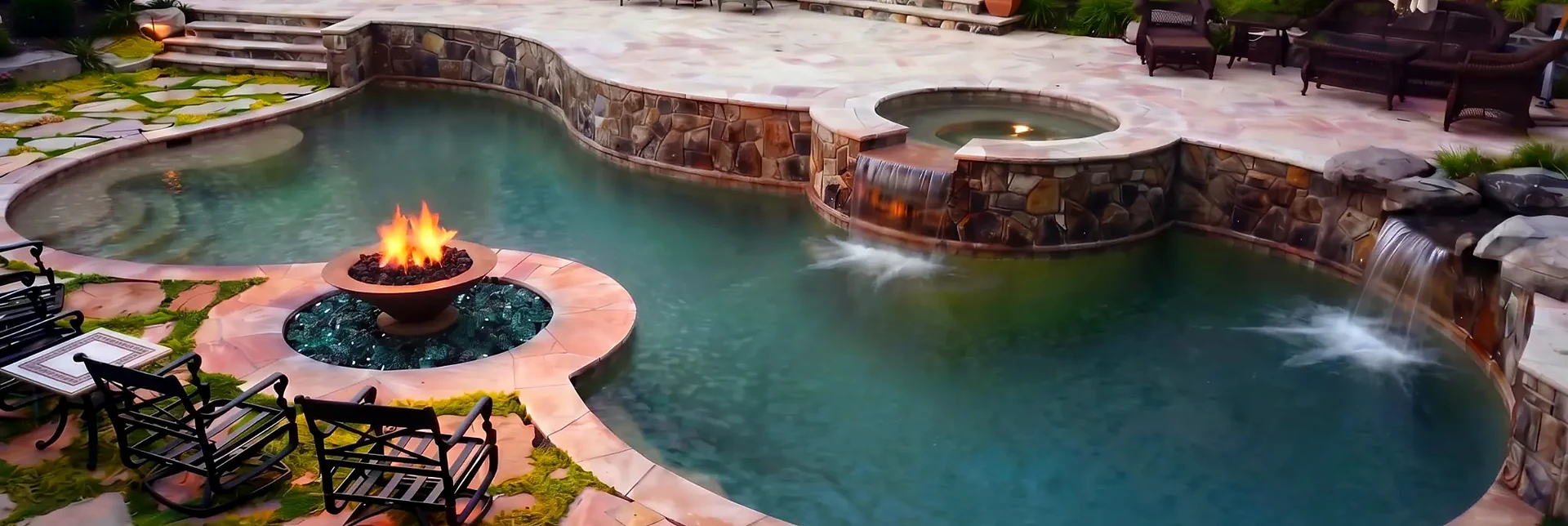
Choosing the right pool edge configuration is one of the most important decisions a homeowner makes when planning a custom gunite pool. The edge type affects aesthetics, water clarity, hydraulics, equipment needs, construction complexity, and long-term maintenance. For owners in southeastern Pennsylvania and western New Jersey, local soils, freeze-thaw cycles, township regulations, and seasonal work windows make the choice even more consequential.
This article compares perimeter overflow pools (often called vanishing-edge, perimeter overflow, or infinity-edge when placed along a view) with traditional skimmer-based pools. It presents a criterion-by-criterion analysis, lifecycle cost considerations, practical construction notes specific to Pennsylvania and New Jersey, best-fit homeowner profiles, and maintenance realities. The goal is balanced, practical guidance to help homeowners—and the contractors who serve them—make informed decisions.
- Perimeter overflow pools provide a continuous, reflective water line and superior surface skimming, but require more complex equipment and precise grading, and typically cost more to build and maintain.
- Traditional skimmer pools are simpler and less expensive to install and repair, with easier equipment access and lower initial construction risk in clay- or rock-heavy Pennsylvania soils.
- Freeze-thaw cycles, groundwater, and local township permit rules materially affect design and cost in southeastern PA and western NJ; perimeter overflow systems often need deeper drainage and more robust basin construction.
- Homeowners seeking a high-end visual experience with level pool decks or uninterrupted terraces are good candidates for perimeter overflow; those prioritizing budget, simple maintenance, or variable soils may prefer skimmer pools.
- Lifecycle costs depend on site-specific factors—energy, water replenishment, pump sizing, and basin maintenance—so owners should plan for higher operational complexity with perimeter overflow pools.
For broader planning guidance, explore our Pool Decisions resource center.
Overview: What Each System Is and How They Work
Perimeter overflow pools feature an uninterrupted coping line where water constantly overflows into a narrow gutter or channel that encircles the pool perimeter. The overflow channel conveys water to a surge basin or dedicated tank where it is pumped back through the filtration and heating systems. The design produces a calm, mirror-like surface and allows deck-level pool edges or a flush transition between pool water and patio surfaces.
Traditional skimmer pools use one or more wall-mounted skimmer openings. Surface water is drawn horizontally across the top toward the skimmer mouth, which feeds the filtration equipment. Skimmers operate on simpler hydraulics and are often less expensive to build and maintain. Skimmer pools typically have visible coping or tile lines above the deck level, which provides a clear separation between water and adjacent hardscapes.
Design and Aesthetics
Perimeter overflow pools are chosen largely for aesthetics. The continuous waterline creates a visual connection between pool water and surroundings, particularly when paired with careful tile, lighting, and landscape design. The lack of a raised coping or exposed skimmer box provides opportunities for level transitions—ideal for modern, minimalist patios and situations where unobstructed sightlines to a view are critical.
Traditional skimmer pools are visually recognizable by their coping and tile band. While they can be elegant and tailored to many styles, skimmer pools do create a deliberately framed edge. This framed edge can be an aesthetic feature, allowing decorative coping, cantilevered stonework, or integrated seating elements.
Visual Tradeoffs
Perimeter overflow: superior for uninterrupted deck-to-water transitions, reflective surfaces, and high-end contemporary looks. The downside is the visible lateral gutter in certain design choices, which must be integrated carefully with finishes and lighting to avoid a "catch-basin" appearance.
Skimmer pools: easier to hide mechanical elements behind tile and coping details. They accommodate classical looks and ornate coping. The raised edge can be intentionally used as seating or safety buffer.
Hydraulics, Filtration, and Water Management
Hydraulics for perimeter overflow pools are more involved. Because the entire surface effectively acts as a skimmer, turnover rates and pump sizing must account for the larger pre-filtering demand. A surge basin is required to handle the volume that overflows; this basin is often sized to accept a significant percentage of the pool volume to smooth water level fluctuations from wind or wave action.
Traditional skimmer pools rely on a smaller number of skimmer openings and a simpler plumbing layout. The primary filtration loop pulls through the skimmers and main drain(s) and is generally less complex. Variable-speed pumps are recommended for both types; they allow flow adjustment for energy savings and quieter operation.
Filtration and Water Quality Considerations
Perimeter overflow pools can deliver cleaner surface water because every point on the surface participates in overflow. However, they also typically require more precise balancing and monitoring because the surge basin introduces another body of water that can harbor debris if not properly screened and accessed for cleaning. Fine-strainer inserts, automatic debris traps, and easy access for vacuuming the surge basin are important design details.
Skimmer pools concentrate surface debris at skimmer mouths, which makes mechanical removal straightforward. Skimmers are accessible and typically contain basket filters that homeowners can empty. Yet surface suction is localized, which can leave debris in the pool corners or along walls if circulation patterns are poorly designed.
Construction Complexity and Site Considerations (Pennsylvania & New Jersey)
Construction complexity is a major differentiator. Perimeter overflow pools require precise structural support for continuous coping, a well-engineered overflow channel, waterproofing details at grade, and a surge basin that may be buried or housed in a nearby equipment room. When building in southeastern Pennsylvania or western New Jersey, local conditions—clay soils, outcrops of bedrock, high groundwater—can increase excavation difficulty and dewatering needs. Township permit authorities frequently require engineered plans for below-grade tanks or significant dewatering operations.
Traditional skimmer pools involve more straightforward excavation for the shell and standard plumbing runs. While any in-ground pool can face rock and groundwater challenges in this region, the lack of an enclosed perimeter basin usually reduces the extent of dewatering and shoring required, lowering immediate construction risk on problematic sites.
Geotechnical and Seasonal Considerations
Freeze-thaw cycles in Pennsylvania demand frost-protected design for equipment pads and piping. Perimeter overflow surge basins must be designed to resist frost heave; this often means deeper foundations or insulation around the surge tank. Clay soils common in some southeastern PA townships expand and contract, placing lateral pressure on tanks and gutters. We recommend soils reports where clay layers or rock are present; structural engineers commonly specify reinforced concrete and waterstops for perimeter channels in these conditions.
Seasonal construction windows are short in this climate. Ground can be frozen or too wet in late fall and early spring, delaying excavation and concrete work. Many municipalities look for proof that contractors plan to mitigate winter construction risks—such as heated enclosures or concrete curing plans—before issuing permits. It is sensible to coordinate permits early in the design phase and to schedule work for late spring through early fall where possible.
Permits, Codes, and Township Requirements
Local code compliance is non-negotiable. Perimeter overflow pools may trigger additional review because they can include buried surge basins, pumps, or enclosed vaults. Township officials in southeastern Pennsylvania commonly require engineered drawings stamped by a licensed professional, especially when excavation approaches building setbacks or requires retaining walls. In western New Jersey, boards of health may be interested in water containment and overflow handling if the system might affect adjacent drainage.
Traditional skimmer pools usually fall under standard pool permitting tracks, but setbacks, barrier fencing, and electrical code compliance still apply. All pools must meet national electrical code (NEC) requirements, and many municipalities require fencing and self-latching gates. Clarify municipal requirements and any HOA covenants early, because aesthetic approvals can extend the timeline.
Lifecycle Cost Comparison
Upfront construction costs for perimeter overflow pools are typically higher. The extra cost stems from additional excavation, reinforced concrete for gutters and surge basins, more advanced hydraulic equipment (larger or multiple pumps, fine screens, surge management), and potentially heated or insulated surge tanks in freeze-prone areas. Because the system is more complex, contractors with experience in perimeter overflow construction are essential; working with inexperienced teams may increase change orders and construction delays.
Operational costs can also be higher. Perimeter overflow pools often require higher pump energy to move water from the surge basin through filters and back to the pool, though variable-speed equipment and energy-efficient pumps can narrow that gap. Evaporation rates are similar when the surface area and exposure are equal, but perimeter overflow pools can have slightly higher makeup-water needs because the surge system complicates short-term level management. Water replenishment costs in municipalities with tiered water rates should be factored into long-term budgeting for owners in Pennsylvania and New Jersey.
Cost Table: Typical Relative Cost Ranges
| Cost Component | Perimeter Overflow | Traditional Skimmer |
|---|---|---|
| Design & engineering | Higher (structural & geotech often required) | Standard (typical pool plans) |
| Excavation & concrete | Higher (additional basin and gutter concrete) | Lower |
| Hydraulics & equipment | Higher (surge basin pumps, larger plumbing) | Lower |
| Operational energy | Moderately higher (more pumping) | Lower |
| Maintenance (annual) | Moderate to high (surge basin upkeep) | Low to moderate (skimmer baskets, occasional valve work) |
| Repair risk (site specific) | Higher on sites with poor soils or high groundwater | Lower |
Maintenance, Safety, and Accessibility
Maintenance responsibilities differ meaningfully. Perimeter overflow systems require periodic cleaning of the overflow gutter and surge basin, pumping out leaves and sediment that collect where water is calm. Screened inlets and skimmer-like traps inside the surge basin reduce maintenance frequency but add components that require occasional service. Access for service—the ability to reach the surge tank, pumps, and valve banks—is a design priority that should be addressed at the planning stage, particularly on sites with limited equipment yard space or tight property access.
Traditional skimmer pools have more accessible maintenance points. Skimmer baskets and pump lids are typically at ground level, making routine tasks such as emptying baskets, cleaning filters, and replacing cartridges easier for homeowners or service technicians. For safety, both systems require compliant barriers and pool covers are equally applicable; however, perimeter overflow gutters can present entrapment considerations if not designed to code with anti-entrapment outlets and compliant suction protection for surge pumps.
Operational Safety Notes
Perimeter overflow pools should be fitted with anti-entrapment devices on surge basin intakes and be installed to meet applicable ANSI/APSP safety standards and federal requirements regarding suction entrapment. Surge basins and overflow gutters should be covered or protected to prevent children or wildlife from accessing narrow channels, and electrical equipment must be waterproofed and grounded to local code. Pool alarm systems work with either arrangement, but owners should plan for safe access to mechanical areas at the design phase.
Water Use, Evaporation, and Pennsylvania Climate Implications
Evaporation depends primarily on surface area, wind exposure, humidity, and air temperature. In southeastern Pennsylvania and western New Jersey, humid summers can reduce evaporation compared with arid climates, but strong winds across elevated sites can increase it. Perimeter overflow systems can slightly increase makeup water needs because surge basins have a small freeboard that can allow water loss during high wind or wave activity. That said, modern surge basins and controlled skimming designs minimize unnecessary water loss.
Freeze-thaw cycles are a critical design element. Pool piping and surge basins must be frost-protected. In practice, this means designing basins below frost depth or providing insulation and heated elements in the mechanical room. Summer-only operation with winterization is common in this region, and both pool types need careful winterization to prevent freeze damage. Perimeter overflow systems often require additional steps: isolating and draining surge basins, and ensuring gutters are clear so trapped water does not freeze and crack finishes.
Durability, Warranties, and Long-Term Repair Considerations
Durability for both types depends on construction quality and materials. Perimeter overflow gutters and surge basins concentrate structural loads and need reinforced concrete and reliable waterproofing systems. Poorly detailed joints or inadequate waterstops can lead to leaks that are more difficult to access and repair than a skimmer box issue. For this reason, warranty terms and the contractor's track record are especially important when choosing a perimeter overflow system.
Traditional skimmer pools have fewer buried compartments, and skimmer repairs are often straightforward. Replacement skimmer units and niches are commonly available and simpler to replace if needed. However, other components—tile bands, coping, and plaster—have normal wear patterns in both pool types and require periodic maintenance. Buyers should review manufacturer warranties for pumps, filters, heaters, and finishes and understand what is covered versus what workmanship or site-specific conditions might cause voiding.
Decision Matrix: Criterion-by-Criterion Comparison
| Criterion | Perimeter Overflow Pool | Traditional Skimmer Pool |
|---|---|---|
| Aesthetics | High-end, seamless waterline; superior for views and modern decks | Classic framed edge; flexible styling options |
| Initial Cost | Higher (engineering, excavation, surge basin) | Lower |
| Operational Complexity | Higher (surge basin, multiple pumps, screening) | Lower |
| Maintenance | Moderate to high (gutter and basin cleaning) | Low to moderate (skimmer baskets) |
| Site Sensitivity (clay, rock, groundwater) | More sensitive; may need stronger measures | Less sensitive |
| Freeze/Thaw Vulnerability | Requires insulation or deeper foundations; more steps for winterization | Standard winterization |
| Permitting Complexity | Often higher due to buried tanks and engineered details | Standard pool permitting |
| Resale Appeal | High in luxury market segments and view properties | Broad appeal; practical buyers appreciate simplicity |
Best-fit and Poor-fit Homeowner Profiles
These profiles aim to help homeowners match the pool type to their priorities and site realities.
- Best-fit for Perimeter Overflow: Owners prioritizing a seamless, reflective waterline, often with a primary view to the landscape or water. Those who have higher budgets, can accommodate equipment space, and whose properties have stable soils or are willing to invest in geotechnical solutions. Homeowners who want a resort-like, modern aesthetic and accept higher initial and operational complexity.
- Poor-fit for Perimeter Overflow: Properties with high groundwater, shallow rock, restrictive access for excavation, or strict municipal limits that complicate buried basins. Owners on a tight budget who prefer lower-operational-complexity solutions.
- Best-fit for Traditional Skimmer: Homeowners desiring a durable, lower-cost, and lower-maintenance pool that fits a wide range of property types. Sites with challenging soils, limited excavation access, or where township permits are uncertain.
- Poor-fit for Traditional Skimmer: Owners who want a flush deck and uninterrupted visual flow to a view, or those specifically seeking the high-end reflective edge for design reasons.
Practical Recommendations from SPCP (Scott Payne Custom Pools)
As part of the SPCP process, we perform a comprehensive site assessment that includes soil evaluation, slope and drainage analysis, access review, and a preliminary permit check with the local township. We recommend obtaining a soils or geotechnical report when clay layers, shallow rock, or groundwater are suspected. We recommend planning for the shorter local construction season by initiating permitting early and lining up subcontractors for concrete and finish work during prime months.
For perimeter overflow projects, SPCP recommends a minimum design standard: reinforced concrete gutters with integral waterstops, a surge basin sized according to the pool volume and expected wave action, fine screening on basin inlets, and accessible mechanical rooms with freeze-protection measures. For skimmer pools, SPCP recommends multiple skimmers and returns to balance circulation and avoid dead zones, and accessible plumbing chases for future serviceability.
Seasonal Construction Scheduling and Site Access
Southeastern Pennsylvania and western New Jersey have distinct seasonal constraints. Late fall and early spring can be wet or frozen, making excavation and concrete work risky. Many towns also have noise or work-hour restrictions that contractors must follow. Door-to-yard access for heavy equipment is an often-overlooked factor: narrow driveways, shared access easements, or long walks from the street add cost and time, particularly for perimeter overflow projects that require heavier excavation and larger structural panels.
SPCP suggests scheduling major excavation and concrete in late spring through early fall, leaving mechanical and finish work for shoulder seasons where possible. Homeowners should plan for temporary fencing, dust control, and neighbor notifications for prolonged projects. If a property has limited access, discuss modular or phased construction approaches early with the contractor.
Maintenance Planning and Annual Checklists
Maintenance plans should be tailored to the chosen pool type. For perimeter overflow pools, annual tasks include inspecting and cleaning the overflow gutter, draining and sanitizing the surge basin as needed, verifying weir plates and screens, and testing surge pump operation. Electrical systems and freeze protection elements should be inspected before winter.
For skimmer pools, routine maintenance focuses on skimmer baskets, filter media changes, inspecting skimmer gaskets and lid seals, and verifying return fittings. For both types, plaster and finish inspections every few years, tile and coping checks, and heater service are recommended.
- Monthly: water chemistry check, filter cleaning schedule, skimmer/surge basin inspection
- Seasonally: pump and heater service, verify winterization steps, inspect electrical grounding
- Annually: professional inspection of shell, coping, gutters, surge basin, structural joints
Case Studies and Local Examples (Hypothetical Summaries)
Case A (Perimeter Overflow): A hillside property with a western view across preserved farmland. The owner accepted higher initial costs for a perimeter overflow to create a reflective edge that visually extends toward the view. Geotechnical work revealed silt overlying stable bedrock at depth, leading to a reinforced concrete gutter and a compact surge basin placed on engineered fill. The township required engineered drawings and a silt-control plan; the project scheduled excavation in late May and completed finish work in September. Operationally, the owner reported higher setup costs for additional screening and slightly higher pump runtime, balanced by strong aesthetic value.
Case B (Traditional Skimmer): A suburban yard with limited access, heavy clay soil, and a shallow septic line in the rear yard. The homeowner chose a skimmer pool that required less excavation and had standard plumbing runs that avoided the septic field. The project completed within the local construction window without requiring a geotechnical report. Maintenance has remained straightforward and predictable; the homeowner valued the lower upfront cost and limited civil work.
How to Evaluate Your Property and Next Steps
Start with these steps to determine which system is more appropriate for your property:
- Request a site visit from a qualified custom pool builder to assess access, slope, and visual goals.
- Obtain a soils/geotechnical report if clay, rock, or high groundwater is suspected.
- Check township permitting and engineering requirements; confirm setbacks, barrier rules, and required stormwater or erosion controls.
- Compare lifecycle costs, not just initial bids—ask for estimated energy and water usage for the proposed hydraulic design.
- Ask about contractor experience with perimeter overflow systems in similar soils and climates; request references and photos of completed projects.
If you are ready to explore options and get a site assessment, we invite you to start your pool journey with SPCP. We'll coordinate the site review, permit checklist, and an initial ballpark estimate that reflects your property's unique constraints.
Keep Reading — Build Your Knowledge
- LUXURY POOL DESIGN IN SPRINGFIELD TOWNSHIP, PA — CUSTOM INGROUND POOLS
- LUXURY POOL DESIGN IN NETHER PROVIDENCE, PA — CUSTOM INGROUND POOLS
- LUXURY POOL DESIGN IN MEDIA, PA — CUSTOM INGROUND POOLS
- LUXURY POOL DESIGN IN BERWYN, PA — CUSTOM INGROUND POOLS
- LUXURY POOL DESIGN IN UPPER PROVIDENCE TOWNSHIP, PA — CUSTOM INGROUND POOLS
- Browse All Pool Decisions Articles →
Final Comparison Summary and Tradeoffs
Neither perimeter overflow nor traditional skimmer pools are categorically superior; each has strengths and tradeoffs. Perimeter overflow pools offer a distinctive, high-end aesthetic and better overall surface skimming, but they bring higher costs, greater construction complexity, and more intricate maintenance. Traditional skimmer pools offer proven simplicity, lower upfront cost, and straightforward maintenance with broad applicability to a range of sites, especially those with compromised access or difficult soils.
For homeowners in southeastern Pennsylvania and western New Jersey, site-specific factors—freeze-thaw cycles, soil type, groundwater, access for heavy equipment, and township permitting—should guide the decision. With careful engineering and an experienced builder, perimeter overflow pools can be built successfully in this region, but they require advance planning and often additional geotechnical and structural investment. Skimmer pools remain an efficient and durable choice where simplicity, predictability, and constrained budgets are priorities.