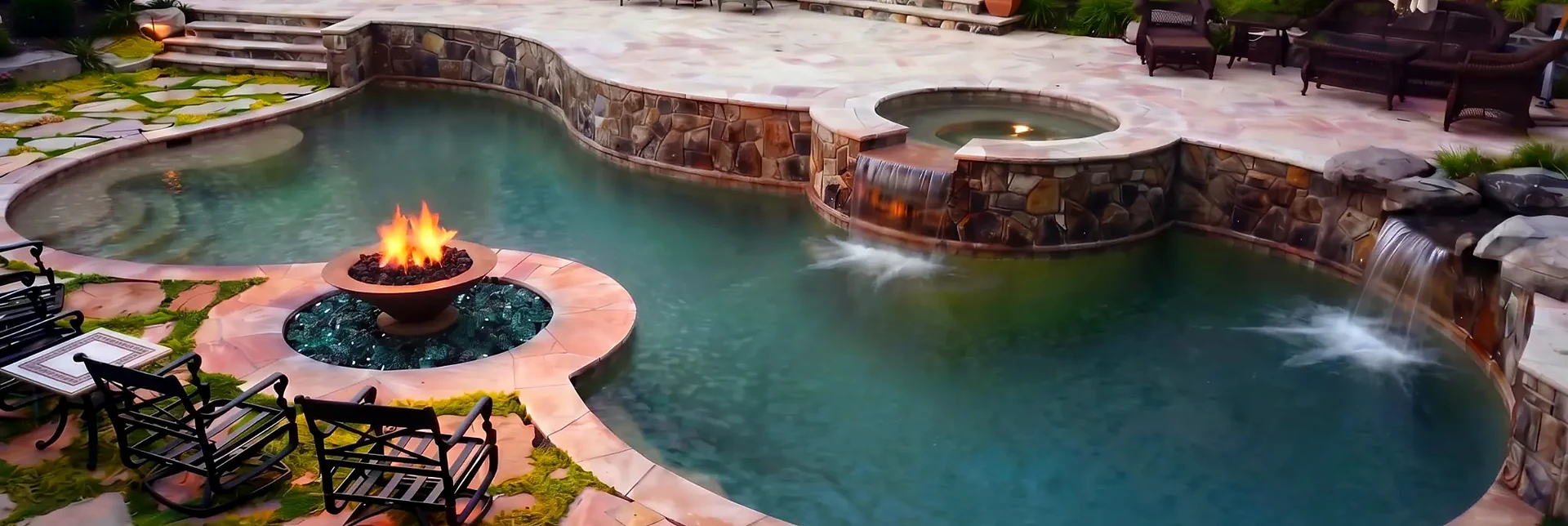
Choosing plants for a poolscape in Pennsylvania requires balancing aesthetics with the realities of the Mid-Atlantic climate, local soils, and the operational needs of a pool. Plant selection influences maintenance, pool water quality, seasonal appearance, and compliance with township ordinances. This article provides a practical, Pennsylvania-specific framework for selecting, grouping, and managing plants around gunite pools so homeowners and landscape professionals can make informed decisions.
Scott Payne Custom Pools focuses on durable, low-debris, and site-appropriate plant palettes that work with regional freeze-thaw cycles, variable soils (silty loams, clay, and rocky substrates), and drainage limitations. The guidance below explains selection criteria, ranks plant options by use case, highlights drawbacks, and offers a decision framework to match landscape goals with site realities and pool maintenance priorities.
- Prioritize low-debris, salt/chlorine-tolerant species and plants with non-invasive roots to protect gunite shells and equipment.
- Select plants according to specific Pennsylvania site conditions: frost hardiness (USDA zones 5–7), soil texture, drainage, and township setbacks/permits.
- Group plants by function — screening, erosion control, shade, ornamentals, and containers — and use a layered approach (groundcover, shrub, small tree) to mitigate wind-blown leaves into the pool.
- Avoid or restrict high-litter trees (e.g., silver maple, poplar), aggressive roots (willows, some viburnums), and species sensitive to chlorine or salt splash.
- Implement maintenance planning: pruning, seasonal leaf barriers, integrated drainage upgrades, and an installation buffer zone near skimmers and equipment access points.
For broader planning guidance, explore our Pool Ownership resource center.
Selection Criteria for Poolside Planting in Pennsylvania
Selection begins with site-specific criteria rather than a list of “pretty” plants. For Pennsylvania properties, relevant criteria include winter hardiness (usually zones 5–7 depending on elevation and latitude), freeze-thaw resilience, root behavior around foundations and plumbing, litter productivity, salt and chlorine tolerance, and compatibility with local soils (clay, loam, sandy fill, or bedrock). Also consider township regulations: setbacks from property lines, visibility triangles, easement restrictions, and tree-protection ordinances in certain municipalities.
We recommend evaluating the following checklist before finalizing species:
- USDA hardiness zone for the microclimate (urban heat islands can shift zones one half to one full zone).
- Site drainage: Does the pool area have positive drainage away from the shell? Are swales or dry wells required?
- Soil type and compaction: Is the soil high-clay or heavily compacted fill? Clay retains water and can heave during freeze-thaw cycles, affecting root growth and nearby decking.
- Root aggressiveness: Will roots target footing, plumbing, or conduits? Choose non-invasive species within 15–20 feet of equipment.
- Litter and pollen: How much leaf drop and fruit will the species produce seasonally?
- Maintenance capacity: How often will pruning, leaf removal, and fertilization be performed?
How We Rank Best Plants by Use Case
Rather than a single “best” list, Scott Payne Custom Pools categorizes top performers by typical poolside roles: year-round screening, low-maintenance foundation planting, shade trees, groundcovers and erosion control, container specimens, and seasonal ornamentals. Each category is ranked according to debris production, root behavior, hardiness, drought tolerance once established, and visual contribution through the seasons.
Below is the ranking system used to evaluate species: A (Excellent fit), B (Good fit with considerations), C (Use cautiously or limited locations), D (Not recommended near pools). This system reflects a balance of aesthetic value and operational risk for gunite pools in southeastern Pennsylvania and western New Jersey.
Year-Round Screening and Privacy Shrubs (Top Picks)
Screening plants must provide foliage coverage in multiple seasons while minimizing leaf and fruit drop into the pool. Good screens also buffer wind, which reduces pool evaporation and wind-blown debris. The best screens for Pennsylvania combine winter hardiness with relatively tidy litter profiles.
Top ranked screening species (A–B) include:
- American holly (Ilex opaca) — B to A: Evergreen with dense branching and low litter. Slow-growing; requires acidic soil or amendment in neutral soils. Berries on female plants provide winter color but can create some litter. Root systems are not typically aggressive. Deer browse can be an issue locally.
- Eastern arborvitae (Thuja occidentalis) — A: Staple evergreen screen in the region. 'Techny' and 'Green Giant' cultivars differ in growth rate; 'Green Giant' is faster but reaches large widths and may need pruning. Susceptible to winter burn and deer browse; soil compaction and too-wet soils can cause decline.
- Boxwood (Buxus spp.) — B: Classic formal screen; hardiness varies by cultivar. Slow-growing and tolerant of pruning, but boxwood blight and vole damage are local concerns. Best for smaller poolscapes and foundation planting rather than large perimeter screening.
- Yew (Taxus spp.) — B: Very tolerant of shade and pruning, low litter. Use with caution near children/pets; all parts are toxic if ingested. Performs well on slopes and formal hedges.
Drawbacks and site considerations: Many evergreen screens require well-drained soils. Arborvitae and holly may decline in heavy clay without soil improvement or raised beds. Planting on the pool side of equipment or within 10 feet of skimmer lines is discouraged. Township ordinances sometimes control mature hedge heights near sightlines and driveways—confirm local codes before planting.
Low-Debris, Low-Maintenance Shrubs and Foundation Plants
These plants form the first visual layer between pool decking and lawn or garden beds. Prioritize species that produce minimal leaves and fruit during the swimming season and recover quickly after seasonal die-back.
Strong choices include:
- Azaleas (Rhododendron spp.) — A for shaded, protected beds: Provide spring color, compact habits, and limited summer litter if pruned properly. Require acidic, organic-rich soils and protection from wind. Avoid placing where heavy pool splash will contact foliage frequently.
- Heuchera (coral bells) and Hosta — A for shady zones: Excellent under taller shrubs and for beds near decking. Hostas produce foliar debris but are easily raked; deer can heavily browse hostas, so plan deterrents if deer pressure is present.
- Lavender (Lavandula spp.) — B for sunny, well-drained sites: Offers fragrance and low litter when thriving. Lavender requires well-drained soil and is not tolerant of constant wet soils—raise beds or use containers where drainage is poor.
- Pineapple guava (Feijoa sellowiana) — C to B in protected microclimates: Semi-evergreen, edible fruit, attractive flowers. Performs in warmer pocket sites in the southeast corner of Pennsylvania; not reliably hardy in all of PA.
Drawbacks: Some foundation plants require soil amendments for long-term vigor. In heavy clay, use raised beds or amend the planting area with compost and sand for better drainage. Keep plantings 3 to 5 feet from decking edges to allow easy access for cleaning and pool maintenance.
Shade Trees and Small Trees: Balancing Canopy with Cleanliness
Tall trees create welcome shade and reduce heat load on pool decks, but they also produce significant litter and have root systems that can threaten underground utilities and the pool shell if placed too close. The selection approach is to favor small- to medium-sized, slow- to moderate-growing trees with limited fruit and manageable leaf drop.
Recommended trees by ranking:
- Serviceberry (Amelanchier spp.) — A: Multi-season interest (flowers, summer foliage, fall color) with modest litter. Shallow root system but not aggressively invasive. Good as a decorative small tree near pool seating areas, set back at least 15–20 feet from pool edge.
- Japanese maple (Acer palmatum) — B to A: Excellent focal point for smaller yards and terraces. Requires protection from hot afternoon sun in certain sites and does not tolerate salt spray. Leaves are small, so litter is easier to manage.
- Northern red oak (Quercus rubra) — C (limited use): Provides excellent long-term canopy but is large and produces significant leaf litter and acorns. Not recommended within 30–40 feet of a small pool or equipment.
- Crabapple (Malus spp.) — C (use disease-resistant cultivars or avoid): Attractive flowers but can produce fruit that drops into pools and attracts insects; only recommended where fruit is acceptable and frequent cleanup is planned.
Installation and placement rules: Maintain a minimum setback based on mature root spread—commonly 15–30 feet depending on species and soil. In clay soils, roots concentrate near the surface to access oxygen; therefore, set trees further back and consider root barriers if tree placement is closer than recommended. For townships with tree protection rules, submit plans showing tree removals or replacements prior to construction.
Groundcovers and Erosion Control Near Pool Decks
Groundcovers reduce soil erosion, trap fine sediment, and create a softer transition between lawns and hardscape. For Pennsylvania, select species tolerant of seasonal moisture variation and that do not create heavy pollen or sticky residues that can contaminate pool water.
Top groundcover solutions:
- Irish moss (Sagina subulata) — B: Fine-textured, low-growing, good for joints between stepping stones. Tolerates light foot traffic and adds a cushion, but can decline in hot dry periods.
- Pachysandra terminalis — A in shade: Year-round coverage in shady areas, though it can be susceptible to vole damage and certain pathogens. Leaves are clean and low in pollen.
- Creeping thyme (Thymus serpyllum) — B for sun: Drought-tolerant, fragrant, and tolerant of light foot traffic. Flowers can attract bees—consider safety if pool users are allergic.
- Native sedges (Carex spp.) — A for variable moisture: Excellent for edges and transition zones, tolerate wet feet and partial sun; many native species provide erosion control without heavy litter.
Drawbacks and maintenance notes: Groundcovers can harbor detritus and harbor insects if not properly maintained. Avoid aggressive runners close to pool skimmers. In watersheds with clay soils and surface runoff toward the pool, combine groundcover with swales, gravel strips, or trench drains to prevent siltation and minimize chemical run-off into the pool.
Containers and Raised Beds: Flexible, Minnor-Impact Planting
Containers and raised beds are an effective strategy to limit root intrusion, improve soil structure for shallow or compacted soil, and create flexible design features that move with seasonal needs. They are particularly useful on small urban lots, decks, and patios common in southeastern Pennsylvania boroughs.
Guidelines for containers:
- Use frost-resistant pots and plan for winter overwintering or planting swaps if using frost-sensitive material.
- In clay sites, raised beds with a minimum of 18–24 inches of amended soil reduce freeze-thaw heaving and promote healthier root systems.
- Place containers to avoid splash into pool equipment and ensure they are not blocking maintenance access or municipal easements.
Recommended container plants:
- Ornamental grasses (e.g., Carex, Pennisetum cultivars) for texture and low litter.
- Herb gardens (rosemary, sage, thyme) for fragrance and culinary use — rosemary needs well-drained soil and sun.
- Seasonal bulbs (dahlias, gladiolus) that can be removed before frost in northern locations.
Drawbacks: Containers require frequent watering in summer and periodic fertilization. They also can be heavy — concrete or large ceramic pots may need engineered pads on decks to bear loads. Consider municipal codes about rooftop or elevated deck weights when installing heavy planters.
Ornamentals and Perennials for Color and Texture
Perennials add seasonal color and can be selected to minimize maintenance and pollen during peak swim season. For Pennsylvania, choose species that bloom in spring to early summer or late summer to fall, avoiding heavy pollen or sticky fruiting bodies near the pool edge.
Top perennial choices with rationale:
- Echinacea (coneflower) — A: Native, drought-tolerant once established, attracts pollinators but not messy on pool surfaces.
- Black-eyed Susan (Rudbeckia) — A: Durable summer color and little litter; deadhead in late summer to control self-seeding if desired.
- Sedum (Autumn Joy) — A for late-season interest: Drought-tolerant, minimal scent, and late blooms that resist heavy insect attraction near pool furniture.
- Siberian iris — B: Attractive spring bloom and leaves are tidy; performs well in moist spots and slopes that drain toward swales rather than the pool.
Drawbacks: Perennials can attract bees and other pollinators. For poolside safety in family settings with children and allergy concerns, locate high-pollinator plants out of primary play zones or use species that are less attractive to stinging insects.
Species to Avoid or Use Only with Caution
Some species commonly used in the landscape are poor choices near pools because of high litter, invasive roots, or fruit that degrades water quality. The following list should be avoided or planted well away from pool areas:
- Silver maple and other fast-growing poplars — significant litter, sap, and roots that can invade piping.
- Willow species — aggressive surface roots and heavy leaf drop.
- Black walnut — allelopathic compounds can affect nearby plantings and leaf litter can create oily residues.
- Fruit-heavy crabapples, mulberry, and persimmon — produce sticky fruit and attract insects and birds.
- Invasive shrubs such as Japanese knotweed and certain cultivars of Pachysandra when used outside their appropriate ranges — control required.
Planting cautions: Even otherwise well-behaved species can become problematic in the wrong soil or microclimate. For example, a shrub that is fine in well-drained soil may develop surface roots in compacted clay and begin to affect hardscape. Always pair species choice with proper site preparation and, where appropriate, root barriers and engineered drainage.
Design Considerations: Layout, Setbacks, and Drainage Strategies
A functional design accounts for mature plant size, root behavior, and seasonal maintenance access. The following framework helps balance aesthetics, safety, and pool operation:
- Buffer Zones: Maintain a planted buffer of at least 3–5 feet of clean, low-debris groundcover or stonework around the immediate decking to reduce organic material reaching the pool. Trees should be set back 15–30+ feet depending on species and soil.
- Root Management: Use vertical root barriers (PVC or composite) around larger shrubs or trees planted within 15–20 feet of the pool. Barriers should extend 24–36 inches deep in most Pennsylvanian soils and be angled away from the pool.
- Drainage Integration: Tie landscape grading into the pool’s drainage plan. Use micro-swales, perforated drain lines, and gravity-fed dry wells to intercept runoff from beds that would otherwise flow toward the pool and introduce silt and fertilizer.
- Maintenance Access: Keep a minimum of 3 feet clearance around mechanical equipment and skimmer access for service. Avoid planting dense evergreens that obscure equipment doors or block the operator’s path.
- Township Requirements: Many municipalities require permits for major grading, tree removal, or structures. Review local codes for riparian buffers, stormwater requirements, and setbacks—Scott Payne Custom Pools recommends documenting existing trees and planned removals during the design phase to avoid delays.
Use the table below to match plant function with recommended setback and maintenance frequency:
| Plant Function | Recommended Setback from Pool Edge | Maintenance Frequency (typ.) |
|---|---|---|
| Low-growing groundcover | 0–3 feet | Monthly weeding; seasonal clean-up |
| Shrubs (dense evergreen) | 3–10 feet | Pruning 2–3 times/year; leaf pick-up in fall/winter |
| Small trees (serviceberry, Japanese maple) | 15–20 feet | Structural pruning annually; leaf clean-up seasonally |
| Large trees (oak, maple) | 30+ feet | Pruning every 3–5 years; significant leaf clean-up |
Installation Timing and Seasonal Considerations in Pennsylvania
Planting schedule and construction sequencing matter in Pennsylvania due to freeze-thaw cycles and soil moisture seasonality. The ideal planting windows are spring (late April to June) and early fall (mid-August to October) when soils are workable and root establishment can occur before extreme temperatures.
Key timing notes:
- Avoid heavy planting during peak summer heat unless irrigation and shade are provided for establishment.
- In areas with clay subsoils or perched water tables, schedule planting after construction compaction and soil remediation are complete so roots are not damaged by subsequent grading.
- Winter planting of balled-and-burlapped material is possible in colder zones but requires winter protection and careful mulching.
- Coordinate with pool construction: final grading and hardscaping should be complete before installing sensitive specimens to avoid mechanical damage and soil compaction from heavy equipment.
Maintenance Strategies and Long-Term Care
Maintenance reduces the conflict between landscape and pool maintenance. A clear management plan should be developed at installation, listing tasks and seasonal timelines that fit local conditions and homeowner capacity.
Recommended maintenance elements:
- Seasonal leaf management plan — install temporary leaf screens or floating net systems for fall if deciduous trees are nearby.
- Pruning schedule — early spring for structural work, light summer pruning to maintain size, and late-season cleanup before leaf fall intensifies.
- Soil health plan — periodic topdressing, mulching, and soil amendment to reduce runoff of fertilizers into the pool.
- Integrated pest management — reduce pesticide use close to the pool; use traps and biological controls when possible.
- Equipment access checks — trim plantings away from pumps, heaters, and control panels at each service visit.
SPCP recommendation: For homeowners working with Scott Payne Custom Pools, we prepare a tailored plant-maintenance schedule during the final walkthrough so pruning, irrigation, and leaf-removal expectations match the installed palette and local microclimate.
Decision Framework: How to Choose the Right Plants for Your Property
Rather than presenting a single list for every yard, use the following decision framework to select plant palettes that match Pennsylvania site constraints, aesthetic goals, and maintenance tolerance.
- Assess site conditions: Identify soil type (conduct a percolation test or soil test), drainage patterns, hardiness zone, sun/shade patterns, and existing utilities/tree protections.
- Define goals: Privacy, shade, low maintenance, visual focal points, pollinator habitat, or formal design?
- Match use case to species rank: Use the A/B/C/D ranking above—prioritize A and B species for pool-adjacent planting. Reserve C species for distant areas or where barriers isolate roots and litter.
- Determine setbacks and root protections: Use the setback table as a minimum, and add root barrier systems where necessary.
- Plan for seasonal operations: Decide on leaf-control strategies, winter container storage, and a fertilization schedule that limits runoff into pool water.
- Confirm municipal requirements: Submit necessary plans and get approvals for major grading, tree removal, or retaining walls before planting or pool construction.
Use this worksheet to guide plant selection:
- Step 1: Soil and drainage classification — sandy, loam, clay, rocky, or fill.
- Step 2: Place high-debris trees beyond the primary setback; place low-debris shrubs and evergreen screens within sightlines.
- Step 3: Use containers for non-hardy or high-maintenance species.
- Step 4: Prioritize native species for long-term resilience and reduced maintenance.
We invite homeowners to start your pool journey with detailed site evaluation and custom planting plans that align aesthetics with long-term pool performance. Early integration of landscape and pool design reduces retrofit costs and improves seasonal enjoyment.
Costs, Codes, and Practical Safety Notes
Costs for plant installations vary widely by species size (container vs balled-and-burlapped), soil remediation needs, irrigation add-ons, and whether root barriers or raised beds are required. Provide conservative estimates: small shrubs and perennials typically range from $25–$150 each installed; larger specimen trees and structural hedges often range from $300–$2,000+ installed depending on size and rootball handling. These figures are directional; obtain local quotes for budgeting.
Codes and inspections: Township codes may require permits for large disturbances, tree removals, or retaining walls. Electrical and gas line clearances around equipment must be respected. Pool fencing and barrier requirements are separate and must be met before pool filling. Scott Payne Custom Pools will coordinate civil and landscape permits where applicable, but the homeowner is responsible for confirming municipal requirements and any HOA rules.
Safety and warranties: Plant health cannot be guaranteed in perpetuity due to pests, disease, and weather. Nurseries and landscapers provide limited plant warranties (commonly 30–90 days for perennials; one growing season for shrubs/trees) — read warranty documents carefully. Where adjacent plantings could affect pool safety (e.g., obscured sightlines), design modifications should prioritize visibility and code compliance over purely aesthetic choices.
Case Studies: Typical Pennsylvania Poolside Planting Scenarios
Scenario 1 — Suburban yard with clay soil and heavy deer pressure: Use raised beds with amended soil for foundation shrubs (azaleas, hemlock performed with caution), install deer-resistant plantings (lavender, boxwood, yews), and place trees (Japanese maple) further back with root barriers. Add gravel trench drains to intercept any surface runoff toward the pool.
Scenario 2 — Small urban lot with limited space and municipal setbacks: Use container plantings with compact evergreens (dwarf arborvitae), small ornamental trees in urban-tolerant cultivars, and paving joints filled with creeping thyme or sedum to limit siltation. Confirm rooftop/deck load limits for large planters.
Scenario 3 — Rural property with sloped site and known groundwater: Prioritize native sedges and riparian-tolerant shrubs away from the pool, tie site grading into stormwater management practices, and create retention areas to keep nutrient-laden runoff from reaching the pool. Consider larger setbacks for trees and extensive use of native groundcovers to stabilize slopes.
Keep Reading — Build Your Knowledge
- What Are the Most Common Pool Ownership Complaints?
- The Truth About Pool Warranties (What\'s Covered and What Isn\'t)
- Say Goodbye to Leaves and Debris in Your Pool
- What Soil Conditions Are Most Problematic for Pools in the Northeast?
- The Truth About Pool Warranties: What\'s Actually Covered?
- Browse All Pool Ownership Articles →
Conclusion
Selecting the best plants around a pool in Pennsylvania requires combining plant biology with local site realities and pool operation needs. The region’s freeze-thaw cycles, variable soils, township regulations, and wildlife pressures all influence whether a plant is an asset or a liability. Use the ranking and decision framework above to prioritize low-debris, non-invasive species and align installation timing, root management, and maintenance planning with your pool contractor.
Scott Payne Custom Pools recommends early landscape integration during pool design and a tailored maintenance plan at handover so the landscape complements pool performance rather than competing with it. For custom guidance and site-specific palettes that respect local codes and soils, reach out to begin the process and start your pool journey.