
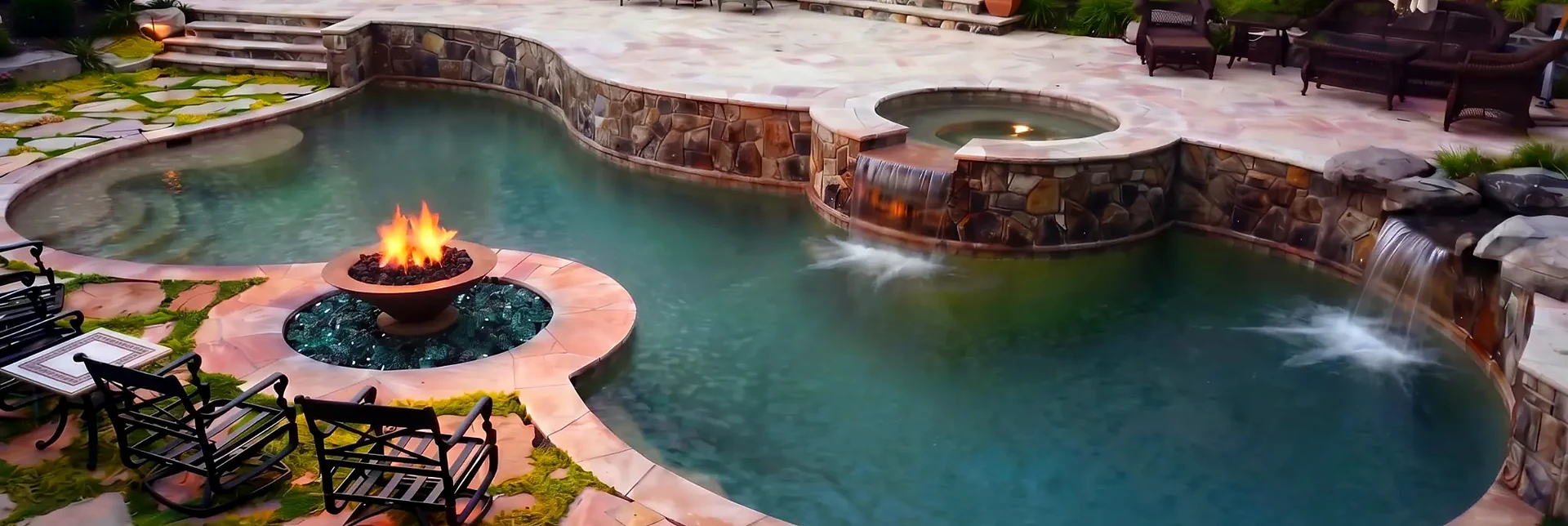
Proper pool lighting is a critical component of backyard pool design that addresses two parallel priorities: safety and ambiance. For homeowners in southeastern Pennsylvania and western New Jersey, lighting decisions must account for regional climate stresses, local permitting and code requirements, and site-specific subsurface conditions. This article outlines an expert framework to select, place, and integrate pool lights so they perform reliably through freeze-thaw seasons, meet township expectations, and create intentional nighttime environments.
Scott Payne Custom Pools (SPCP) approaches lighting as an engineered layer of a project, not a cosmetic afterthought. The guidance below combines selection criteria, ranked options by use case, and a decision framework specific to the region’s construction realities. Readers will find practical layouts, trade-offs, and a clear path from assessment to commissioning.
- Prioritize safety-focused fixtures (pool-wall, deck, and path lights) and layered controls (time, dimming, motion, and zoned circuits) to reduce nighttime hazards.
- Rank lighting options by use case: safety, ambiance, energy efficiency, and retrofit ease; LED niche fixtures and color-tunable systems lead for most residential projects.
- Account for Pennsylvania-specific factors: freeze-thaw cycles, expansive clay or rock substrates, groundwater, and township permitting for wiring, conduit and flood-prone yards.
- Design for maintenance access — accessible junctions, recessed conduit runs, and space for replacement without major excavation are essential in our region.
- Coordinate lighting with pool equipment, drainage and landscape contractors during pre-construction; after-installation testing and a documented hand-off improve longevity.
For broader planning guidance, explore our Pool Safety resource center.
Selection Criteria: How We Evaluate Lighting Options
Before recommending fixtures or layouts, a clear set of selection criteria helps compare alternatives objectively. The criteria below reflect performance, durability, serviceability and compliance priorities that matter in southeastern PA and western NJ.
SPCP uses the following measurable criteria when evaluating every lighting option:
- Lumen efficacy and color rendering — Enough usable light where people walk or stand, with CRI (color rendering index) appropriate for tasks.
- Ingress protection and thermal tolerance — IP ratings, thermal derating at buried or confined locations, and resistance to freeze-thaw cycles.
- Serviceability — Access to lamps, drivers, and junctions without pool demolition; preference for removable niches or remote drivers.
- Compatibility with controls — Dimming, DMX/RGB, timers, and emergency shutoff integration.
- Energy use and lifecycle cost — Wattage, driver efficiency, expected lamp life and replacement part availability.
- Code and permitting risk — Whether the option complicates electrical permits, bonding requirements, or township inspections.
- Site constraints — Soil type, groundwater, and seasonal access that affect conduit runs, trenching windows, and fixture selection.
These criteria shape the rankings below and the practical layouts we specify for regional projects.
Ranking the Best Options by Use Case
Not every fixture suits every property. We group the strongest lighting strategies into use-case categories, explain why each is appropriate, and call out limitations that affect Pennsylvania and New Jersey installs.
1. Safety-First (Primary Pool-Wall LED Niches)
Pool-wall LED niches installed around the perimeter are the foundation of a safety-first layout. They provide even illumination of pool walls and steps, reduce depth perception issues, and are commonly specified for ongoing code compliance.
Why it qualifies: Modern LED niche fixtures have high lumen output at low energy, solid-state reliability, and are available with removable trims and remote drivers for safer, easier service. For safety zones such as shallow ends, steps and ladders they deliver task-level lighting that reduces trip and fall risk.
Drawbacks: Proper installation requires watertight niches and accessible conduit runs. In areas with high groundwater or rock, trenching and waterproofing can increase cost. Also, older gunite pools often need retrofitting niches which may require partial replastering or invasive cutting.
2. Ambiance and Color Control (Color-Tunable LEDs with Zoned Control)
LED color-tunable fixtures and controllers provide mood setting and programmable scenes. They’re often combined with synchronized deck and landscape lighting to produce cohesive nightscapes.
Why it qualifies: RGBW or tuneable white systems offer wide design flexibility—white for safety, color for events. When paired with zoning and dimming, they let homeowners have both functional and festive lighting without separate systems.
Drawbacks: These systems add complexity: DMX controllers, software, and more intricate wiring. They may require licensed electricians experienced with digital control protocols. In municipalities with strict electrical permitting, additional documentation and inspection are common.
3. Energy-Efficient Low-Voltage Deck and Step Lighting
Low-voltage LED deck lights and step riser fixtures illuminate walking surfaces and pool surrounds while minimizing glare. They are ideal where visual guidance from pool to house or patio areas is required.
Why it qualifies: Low voltage (12V or 24V) systems reduce shock risk concerns near water and are typically easier to retrofit into existing decks. LED options with high CRI maintain good visual clarity along pathways.
Drawbacks: Voltage drop across long runs can reduce fixture brightness; careful wire sizing and transformer placement are necessary. Transformers and drivers must be located above expected flood elevations and signed out in permit sets in floodplain areas of South Jersey or lower-elevation PA townships.
4. Underwater Architectural Highlights (Accent and Step Washes)
Accent underwater fixtures focus on water features, steps, and benches to emphasize edges and changes in depth—important for safety and nighttime usability.
Why it qualifies: Directed optic fixtures reduce backscatter and create clear visual cues around steps and seating areas. They enhance both safety and perceived luxury when used sparingly and deliberately.
Drawbacks: Underwater fixtures demand robust waterproofing and must meet appropriate IP and electrical bonding standards. In winter climates with freeze-related expansion, attention to strain on mounts and conduit is necessary.
5. Landscape and Path Integration (Holistic Site Illumination)
Integrated landscape lighting—spotlights, bollards, and path lights—communicates safe routes to and from the pool, reduces dark corners, and complements pool-zone lighting.
Why it qualifies: Thoughtfully coordinated fixtures reduce the amount of direct pool light required and improve safety for circulation between house, pool, and parking areas. They also create attractive sightlines from inside the home.
Drawbacks: Landscape circuits should be separated from pool bonding and must comply with local electrical codes. In clay-heavy soils or bedrock areas typical of parts of Chester and Bucks counties, burying conduits can be more labor-intensive and require different trenching equipment.
Decision Framework: How to Choose the Right Layout for Your Property
Choosing a lighting layout requires balancing site constraints, safety priorities, aesthetic goals, and maintenance realities. The framework below guides homeowners and professionals through a stepwise decision process tailored to southeastern PA and western NJ.
Step 1 — Site and Code Assessment
Begin with a site assessment that documents: pool orientation, yard grade, typical winter conditions, groundwater depth, soil type (clay, loam, rock), and any municipal overlay districts or floodplain designations. Confirm township electrical permitting requirements and any HOA restrictions.
Why it matters: Many townships in the region require electrical plans for in-ground pools that show bonding, conduit paths, transformer locations and GFCI details. In floodplain or high groundwater areas, conduit and transformer locations are scrutinized.
Step 2 — Define Primary Use Cases
Clarify the high-priority outcomes: is the pool primarily for safety at night (family use), entertaining (color scenes), or both? For family safety, prioritize consistent pool-wall lighting and well-lit egress paths. For entertaining, allocate extra budget to color-tunable fixtures and zoned control.
Why it matters: Budget allocation affects driver placement, niche counts and control sophistication. Over-investing in ambiance without adequate safety lighting is a common planning mistake.
Step 3 — Determine Electrical and Service Access Strategy
Map conduit runs with a focus on future serviceability. Remote drivers and accessible junction boxes reduce the need for draining or deconstructing the pool during repairs. Plan transformer and service equipment locations above expected flood elevations and within township-allowed setbacks.
Why it matters: Pennsylvania freeze-thaw can drive water into conduits and junctions; locating serviceable components above grade and in ventilated enclosures reduces failure risk.
Step 4 — Select Fixtures by Zone
Allocate fixtures into zones: underwater pool wall, step/accent, deck/perimeter, path/landscape and feature-specific (waterfalls, spas). Each zone has unique photometric and wiring needs. Use the selection criteria at the start to evaluate brands and models for each zone.
Why it matters: Zoning allows you to shut off party colors at night while leaving path lighting on, or to apply safety scenes automatically at close-of-business hours using timers.
Step 5 — Mock-Up and Photometric Validation
We recommend a mock-up with temporary fixtures or photometric modeling to validate light levels at grade and in water. Photometric studies help confirm step definition, glare control, and transition lighting from pool to patio.
Why it matters: Modeling reduces surprises—especially in complex yards with retaining walls, trees, or berms typical in Bucks or Gloucester counties where shadows and glare can be unpredictable.
Detailed Layouts and Examples by Common Pool Types
Below are layout templates tailored to the most common installations SPCP encounters in southeastern Pennsylvania and western New Jersey: family-oriented residential pools, entertainment-focused pools, and retrofit projects. Each template includes fixture counts, typical distances, and wiring notes.
Family-Oriented Residential Pool (Safety First)
Typical features: gentle bench seating, one main entry set of steps, shallow end for children. Objective: continuous safety lighting with low maintenance overhead.
Recommended fixtures and counts (example for a 12' x 24' rectangular pool):
- Pool-wall LED niches: 4–6 evenly spaced; extra one near entry steps
- Step riser light: 1–2 dedicated underwater step washers
- Deck path lights: 4–6 low-voltage bollards or recessed deck lights
- Perimeter landscape spots: 2–4 to reduce dark hiding places
Wiring and placement notes: Use a dedicated 120/240V GFCI-protected circuit for pool lights and separate low-voltage transformer for deck lights. Remote driver placement inside a mechanical room above flood elevation is preferred for PA sites prone to intermittent surface water.
Entertainment-Focused Pool (Ambiance Priority)
Typical features: freeform shape, water features, integrated spa. Objective: zoned color control for parties, with fallback safety scenes.
Recommended fixtures and counts:
- Color-tunable pool-wall LEDs: 6–10 depending on pool perimeter and features
- Dedicated accent fixtures for waterfalls and spa: one per feature, with dedicated low-voltage circuits
- Underwater step fixtures: 2–3 with crisp optics
- Landscape and path integration: 8–12 fixtures coordinated with dimming scenes
Wiring and control notes: Implement a zoned DMX-compatible controller with scene presets and local lockouts for safety. Include programmed “safety mode” timers that default to full white at designated hours. In townships with strict noise or hours ordinances, tie light scenes to time-based restrictions.
Retrofit and Historic Property Considerations
Existing gunite pools or properties with mature landscaping present access constraints. In Pennsylvania’s older neighborhoods, permits for cutting concrete or significant excavation may be conditional.
Retrofit recommendations:
- Surface-mounted or adjustable niche-style fixtures that fit existing openings when possible
- Remote driver systems to avoid replacing in-water components
- Where trenching is limited by rock or ledge, consider above-grade conduit or routing along fence lines with weatherproof junctions
Construction note: Avoid claims about no-dig solutions; many retrofits still require careful partial re-plaster or ledge coring. SPCP recommends multiple non-invasive mock-ups before finalizing fixture types to minimize unexpected costs.
Pennsylvania- and New Jersey-Specific Installation Considerations
Regional geology and climate have real implications for fixture selection and layout durability. This section addresses the most relevant conditions for southeastern PA and western NJ and the adjustments professionals should make.
Freeze-Thaw and Seasonal Drainage
Freeze-thaw cycles in the region subject small voids, conduits and fixture seals to cyclic stress. Water that migrates into joints can freeze and expand, compromising niches and conduit transitions.
Mitigation strategies:
- Use flexible watertight conduit fittings and expansion-rated sealants at vertical transitions.
- Locate electrical boxes above seasonal high-water marks where township regulations permit.
- Plan winterization that isolates drivers and transformers and follows manufacturer guidance for draining or maintaining underwater fixtures.
Soil, Rock, and Groundwater
Many parts of southeastern PA have clay-rich soils and occasional bedrock close to grade; western NJ includes coastal plain sand in places with higher groundwater. Both conditions influence trenching and fixture placement.
Site-specific tactics:
- In high groundwater, use rigid, schedule-rated conduit sized for future wire pulls and routed to above-grade service enclosures.
- In clay or rock, coordinate with the excavation contractor to schedule trenching windows that minimize weather delays; consider rock-splitting or soft-excavation specialists.
- Install drain paths to prevent surface water pooling near transformers and junctions; include sump or swale details as needed for township plan approval.
Permitting and Township Inspections
Local permitting can vary widely: some boroughs require a full electrical plan with BIM-level detail; others accept standard wiring diagrams. Early engagement with township building officials and inspection scheduling avoids rework.
SPCP recommendation: Document all bonding, conductor sizes, junction box locations, and driver locations on permit drawings. Include manufacturer cut sheets and IP ratings where required. When specifying above-grade service boxes, reference local elevations and flood-zone regulations.
Controls, Bonding and Safety Integration
Lighting must be integrated with pool bonding, GFCI protection, and control systems. Missteps here create safety and inspection problems that are expensive to resolve.
Bonding and Grounding
Pool lighting circuits require correct bonding per NEC and local amendments. Bonding ensures that any stray currents are carried away and that metal fixtures and enclosures do not become energized.
Guidance: Use copper bonding conductors sized per code from the pool bonding point to metallic fixtures and equipment. Include documentation of bonding continuity at the electrical inspection; consider labeled test points for future inspectors.
GFCI Protection and Circuit Segregation
All pool-related circuits that supply submerged or near-water fixtures require GFCI protection. Additionally, segregating pool lighting circuits from landscape circuits can simplify troubleshooting and reduce nuisance trips.
Practical tip: Place GFCI devices in accessible, weatherproof enclosures and document reset locations for homeowners. In freeze-prone areas, ensure enclosures are above expected water accumulation.
Control Strategies for Safety and Maintenance
Implement layered control strategies: mandatory safety scenes, time-based curfews, and manual overrides for guests. Include remote monitoring and a simple homeowner interface to reduce misuse.
SPCP process statement: We recommend programming a default "safety mode" that reverts lighting to full white and reduces or disables color sequences at a chosen hour. We also recommend documenting step-by-step reset procedures for power outages and seasonal shutdowns.
Maintenance, Serviceability and Lifecycle Planning
Lighting systems are long-term investments. Selections should account for replacement parts, expected lamp life, and how fixtures are serviced without major structural work to the pool shell.
Design for Replaceability
Choose fixtures and niches with removable trims and replaceable LED modules. Remote drivers located in accessible mechanical rooms extend service life and reduce winter-related failures.
Maintenance schedule suggestions:
- Annual inspection of seals, niches and wiring before winter
- Quarterly controller firmware checks and backups
- Immediate inspection after major storms or freeze-thaw cycles
Warranties and Manufacturer Support
Understand warranty coverage for wet-rated fixtures in freeze-prone climates. Many manufacturers specify differential conditions for coastal or freeze-thaw environments and recommend professional winterization.
Careful language: Warranties vary by part and region; purchasers should read manufacturer terms closely and retain installation records to support claims. SPCP encourages specifying manufacturers with documented local support and available replacement parts.
Cost Considerations and Budgeting Guidance
Lighting budgets range widely based on fixture quality, control sophistication, and site complexity. The table below illustrates typical cost drivers and ballpark ranges for planning purposes only; local contractor quotes should be obtained for firm pricing.
| Component | Typical Cost Driver | Ballpark Range (USD) |
|---|---|---|
| Pool-wall LED niches | Number of fixtures, remote driver vs. in-niche | $300–$1,200 per fixture installed |
| Color-tunable control system | DMX controller, programming, panels | $1,500–$6,000 |
| Low-voltage deck/path lighting | Wire length, fixture quality | $100–$400 per light installed |
| Transformers and GFCI enclosures | Location and weatherproofing | $300–$1,200 |
| Trenching/rock excavation | Soil/rock conditions | $500–$5,000 (site dependent) |
| Photometric mock-up | Temporary fixtures and technician time | $300–$1,200 |
Note: These ranges are for planning only and do not constitute a quote. Prices vary by township permitting requirements, access, and subsurface conditions such as bedrock or high groundwater which can materially increase excavation costs.
Installation Best Practices and Typical Installer Errors
Even when the right fixtures are chosen, incorrect installation can shorten lifespan and impair safety. The following practices minimize those risks.
Best Practices
- Seal conduit entries and use expansion-capable fittings where conduits pass through decks and coping.
- Install accessible pull points and service loops in conduit runs to facilitate future wire replacement.
- Mount transformers and drivers in ventilated, above-grade enclosures that are easily reachable and documented on as-built plans.
- Label all circuits, junctions and control panels clearly for inspectors and future service personnel.
Common Installer Errors
- Routing low-voltage wiring through saturated trenches without proper conduit, leading to corrosion and failures.
- Placing drivers or transformers below likely flood or snow drifts instead of in mechanical rooms.
- Insufficient bonding on metal fixtures and failing to document continuity for inspectors.
- Underestimating voltage drop on long low-voltage runs causing dimming or inconsistent performance.
Addressing these errors during planning reduces schedule risk and lifecycle cost.
Commissioning, Handover and Seasonal Procedures
Commissioning validates that lighting works as designed and that safety settings operate reliably. A thorough handover ensures homeowners can operate and maintain the system correctly.
Commissioning Checklist
- Photographic records of bonding points and conductor terminations.
- Voltage and continuity tests for all circuits and GFCI trip tests with recorded results.
- Scene verification for all programmed modes including safety mode and timed curfew.
- As-built wiring diagrams and manufacturer cut sheets provided to the homeowner.
SPCP process statement: We perform a three-stage commissioning protocol—functional testing, safety-mode verification, and owner training—documenting each stage with photos and signed acceptance forms.
Seasonal Shutdown and Winterization
In regions with sustained freezing, follow manufacturer guidance for winterization of underwater fixtures and controllers. Consider removing transformers to dry, accessible locations if recommended.
Practical notes: Do not rely solely on pool drainage to protect in-niche wiring. Where recommended, follow steps to isolate drivers, cap conduit ends, and document winter storage locations for easy spring reactivation.
Body CTA
If you’re planning a new pool or upgrading an existing system in southeastern Pennsylvania or western New Jersey, start with a site-specific lighting plan that addresses safety, durability and serviceability. To discuss lighting layouts tailored to your property and to start your pool journey, contact Scott Payne Custom Pools for a consultation that integrates electrical design, township permitting and seasonal planning.