
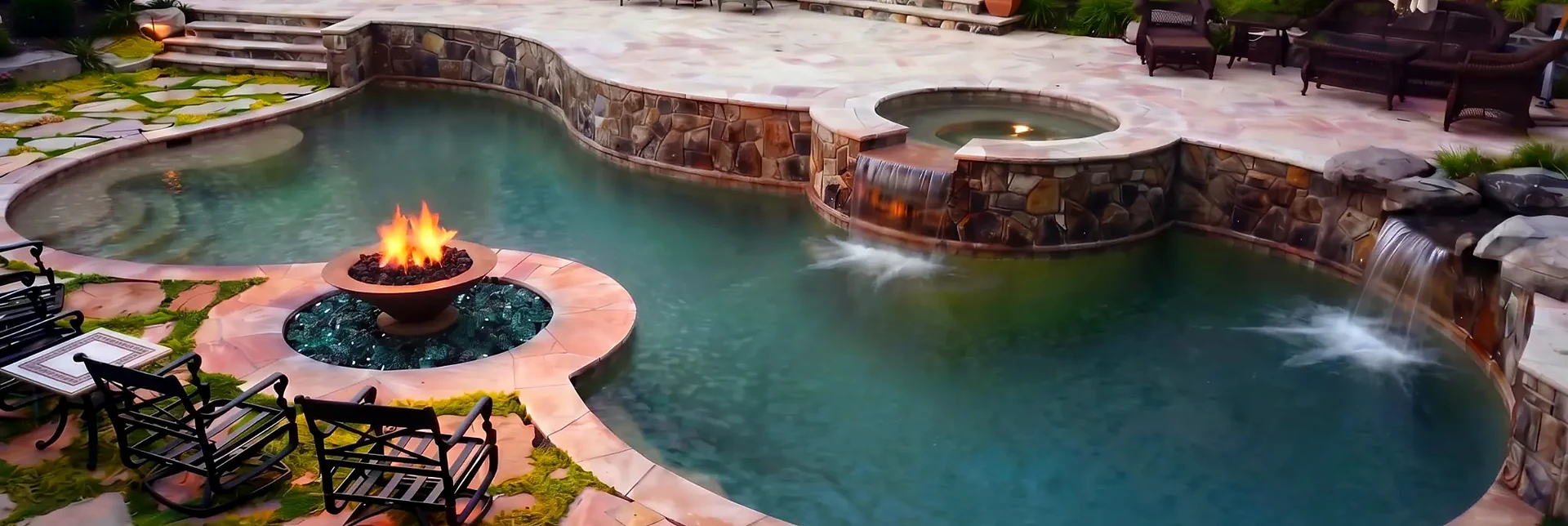
Tree roots near a pool present one of the more complex site conditions a pool contractor can encounter. The root systems of mature trees can extend well beyond the tree canopy, interact with utilities, alter drainage patterns, and exert physical pressures on swim structures and hardscapes. In southeastern Pennsylvania and western New Jersey, where freeze-thaw cycles, variable soils, and older suburban lots are common, root-related risks require careful evaluation during design, permitting, excavation, and construction.
This article examines the problem honestly and comprehensively. It explains how roots cause short- and long-term damage, differentiates preventable from unavoidable risks, lists warning signs, covers diagnostic options and practical remedies, outlines likely cost implications, and describes when to involve a certified arborist, geotechnical engineer, or structural contractor. The goal is to help homeowners and decision-makers understand trade-offs so they can select durable, code-compliant solutions appropriate to their property and municipal requirements.
- Tree roots can uplift pools, crack decking, distort coping, and compromise underground plumbing—risks magnified by Pennsylvania freeze-thaw, clay soils, and high groundwater.
- Early site assessment is essential: identify species, trunk distance, canopy radius, and signs of decay; engage an arborist for protected or large trees.
- Preventable issues include poor drainage and shallow planting near the pool; unavoidable risks relate to mature root mass under soil and bedrock constraints.
- Solutions range from targeted root pruning and root barriers to full tree removal, grade redesign, or engineered retaining walls; costs vary widely—get multiple quotes and written scope documents.
- Bring in a geotechnical engineer for clay, ledge, or high groundwater; permit and tree protection rules vary by township—plan for seasonal limitations in PA/NJ.
For broader planning guidance, explore our Pool Construction resource center.
Why Tree Roots Matter for Pool Construction
Tree roots matter because they are living, growing structures that can exert both biological and mechanical influence on the built environment. In pool construction, there are multiple interfaces where roots become relevant: excavation and shell placement, pool plumbing trenches, surrounding hardscape, and yard grading. Roots can cause immediate nuisance during digging and can also be a long-term source of movement, moisture intrusion, and structural distress.
In Pennsylvania and New Jersey, several regional factors heighten the importance of root management. Seasonal freeze-thaw cycles cause soil heave; soils can include expansive clays that swell when wet and shrink when dry; many older properties were landscaped with large ornamental trees close to house and pool footprints; and groundwater or perched water tables can feed root growth toward moisture sources, including pool plumbing. Taken together, these variables change both probability and severity of root-related problems compared to more arid or uniformly sandy regions.
Typical Problems Caused by Tree Roots
Tree roots cause a range of problems that affect aesthetics, function, and safety. It is important to separate cosmetic issues from structural threats so property owners understand priorities and when to act.
Uplift and Heave
Uplift occurs when roots grow and exert upward pressure on near-surface elements. In cold climates with freeze-thaw, heave can be cyclical: roots push, soil freezes and expands, then thaws. Over months and years, coping stones, concrete decks, and shallow stonework can tilt or crack. Pools themselves—particularly those with shallow over-excavation or poor backfill—can experience movement if roots disrupt uniform support around the shell.
Cracking and Displacement
Roots infiltrating under concrete or masonry can cause cracks, joint separation, and misalignment of steps or benches. Plumbing trenches are especially vulnerable: roots grow toward moisture and can encase PVC or HDPE lines. While properly glued and bedded pipe is resilient, extreme root pressure or repeated freeze-thaw cycles can lead to leaks or disconnection over time.
Moisture and Filtration Issues
Roots alter subsurface hydrology. They can change local drainage patterns, wick moisture, and cause localized saturation. Near pools, this affects filter equipment pits, pool basins, and surrounding backfills. Saturated soils reduce bearing capacity, increasing settlement risk; they can also promote corrosion of metal components used near pool equipment.
Vegetative Debris and Maintenance Burdens
Rooted trees are also a maintenance source: leaves, seeds, bark, and small branches increase cleaning and filter loads. While not structural, this recurring expense and nuisance factor influences tree retention decisions.
Causes and How Roots Behave
Understanding cause begins with tree biology: roots seek water, oxygen, and stability. Root architecture depends on species, age, soil type, and available space. Some species develop deep taproots (e.g., oaks when young), while others have extensive lateral root systems (e.g., maples, willow). In compacted or high-water-table soils, roots tend to remain near the surface, increasing interaction with shallow structures.
Site-specific factors—such as compacted fill, buried utility corridors, or a pool basin acting as a moist attractor—can concentrate root growth. In Pennsylvania and New Jersey, freeze-thaw cycles cause repeated expansion and contraction of near-surface soils, which can accelerate root movement and the mechanical disruption of adjacent hardscape.
Warning Signs Homeowners Should Watch For
Identifying warning signs early saves money. Homeowners should look for these indicators during pre-construction assessments and routine maintenance.
- Visible cracking, lifting, or leaning of pool coping, concrete deck, or adjacent retaining walls.
- Root crowns or buttress roots within 10–20 feet of the pool shell, particularly if trunks are large.
- Downhill saturation or persistent puddling near the pool, which indicates altered drainage or high water table.
- Plumbing slow-drainage, repeated filter blockages, or unexplained pressure loss in circulation systems—possible root intrusion into lines or equipment vaults.
- Tree health decline: crown dieback, fungal conks at the base, or root-exposed conditions—these can signal unstable trees that pose risk to the pool and safety.
Professional inspection during the design phase should include both visual checks and non-invasive tests such as probing and soil moisture mapping.
Preventable vs. Unavoidable Risks
Not all root-related issues are preventable. Distinguishing between avoidable and inherent risks helps set realistic expectations for mitigation costs and long-term maintenance.
Preventable Risks
These are typically the result of poor planning, installation shortcuts, or lack of maintenance. Examples include:
- Poor drainage design that channels water toward tree roots and the pool edge.
- Planting new trees too close to the planned pool or using species with aggressive lateral roots.
- Inadequate excavation practice that severs structural roots without proper stabilization, leading to decay and tree failure.
- Lack of root barrier or insufficient depth/compaction of backfill in root-prone areas.
Preventable issues are best addressed before excavation. Permits and construction documents should show tree protection zones, grading plans, and root-management measures.
Unavoidable or Inherent Risks
These arise from pre-existing mature root systems that extend under the pool footprint or from geologic conditions. Examples include:
- Large mature trees within the root spread zone whose major roots are under the proposed shell or deck.
- Subsurface bedrock or ledge forcing roots into confined zones, concentrating pressure.
- High groundwater or perched water tables that attract and sustain extensive root mats near the pool.
Inherent risks often require more intrusive remedies—up to tree removal or full redesign of pool placement—and may involve coordination with municipal tree ordinances or conservation easements.
Diagnosing Root Problems Before You Build
Accurate diagnosis starts with a layered approach: visual survey, targeted probing, soil and moisture testing, and when necessary, specialist inputs. Ignoring diagnosis often costs more than conservative early testing.
Phase 1: Visual and Historical Survey
Begin with a full property walk. Document tree species, trunk diameter at breast height (DBH), canopy spread, previous root damage, and signs of poor drainage. Review historical aerials when available to see past vegetation patterns and prior site alterations. Some townships keep records that affect tree removal permissions.
Phase 2: Non-Destructive Testing
Use hand probes, soil resistivity meters, and ground-penetrating radar (GPR) when required. GPR can map larger roots and reveal utilities; however, its depth and resolution vary with soil conditions—clay attenuates signal and may give limited detail. GPR is more effective in sandy, dryer soils common to some pockets of the region.
Phase 3: Geotechnical and Arboricultural Assessment
When GPR or probing indicates extensive rooting or complex soils, engage a geotechnical engineer and a certified arborist. The geotechnical report should describe soil classifications, load-bearing capacity, frost depth considerations for southeastern PA and western NJ, and groundwater seasonality. The arborist assesses tree stability, the likelihood of root regrowth after pruning, and legal constraints like protected tree ordinances.
Remediation and Construction Strategies
Remediation strategies should aim to protect pool integrity while balancing tree preservation goals, municipal requirements, and budget. A layered defense combining mechanical, biological, and engineered solutions usually provides the most durable outcomes.
Root Pruning and Selective Removal
Root pruning can be effective when roots are small to moderate in size and when removal will not destabilize the tree. Proper technique matters: roots should be cut with clean, sharp tools; cuts should be made outside the structural root zone when possible; and measures taken to minimize soil compaction and infection risk. The arborist should provide a written scope showing which roots are safe to prune and which require tree removal.
Root Barriers and Isolation Trenches
Root barriers—plastic, metal, or geotextile composite—can be installed vertically between the tree and pool to redirect future root growth downward. Barriers should extend to a depth appropriate for soil type (commonly 18–36 inches in many yard soils; deeper when significant lateral roots exist) and be installed with a smooth side toward the tree to discourage root attachment. Note: barriers redirect roots but do not stop them completely; long-term monitoring is necessary.
Redesign Pool Footprint and Hardscape
When possible, move the pool or alter the shape to avoid large roots and critical tree zones. Even small shifts—several feet—can make a difference on urban or suburban lots. Adjusting the pool edge away from known root masses reduces pressure and the need for invasive root work.
Engineered Backfill, Compaction, and Frost-Proofing
Proper backfill material and compaction reduce settlement and limit space for root intrusion. Where freeze-thaw is a concern, select materials that drain well and have low frost susceptibility. In Pennsylvania, frost depths vary: local code and conditions determine frost protection requirements for slab and footing design near the pool and equipment pads. Work with the pool builder and geotechnical engineer on specified backfill sieve curves and compaction standards.
Structural Solutions: Walls, Piers, and Flexible Joints
Where roots cannot be avoided, design resilient structures: reinforced retaining walls to resist uplift, isolated piers for decking, flexible expansion joints in coping and tiled areas, and increased reinforcement in concrete adjacent to tree root zones. These details accommodate minor movement and reduce the likelihood of brittle failure.
Plumbing Strategy
Use conduit or sleeves for critical lines, place lines below expected root depth when feasible, and choose flexible connection details to accommodate some movement. Incorporate access points for inspection and sectional replacement. For high-risk roots and groundwater, sleeved insulated lines with tracer wire reduce repair disruption.
Costs, Timeframes, and Permitting Considerations
Root management costs vary significantly with tree size, species, site access, and the chosen remediation. It's better to budget realistically than to assume a one-size-fits-all price.
Typical Cost Ranges (Indicative)
| Task | Typical Range (southeastern PA / western NJ) | Notes |
|---|---|---|
| Basic root pruning and trenching | $500–$2,500 | Small to medium roots; access dependent |
| Root barrier installation (per linear foot) | $25–$75/ft | Material and depth influence price |
| Certified arborist assessment | $200–$800 | Depends on report detail and travel |
| Arborist-supervised tree removal (large) | $1,000–$6,000+ | Distance to pool, disposal, stump grinding |
| GPR or subsurface utility mapping | $500–$2,000 | Site size and soil type affect accuracy |
| Geotechnical investigation | $1,500–$6,000+ | Includes borehole drilling and lab tests |
| Engineering remedies (walls/piers) | $5,000–$30,000+ | Site complexity and materials vary widely |
These numbers are illustrative. Obtain written scopes and itemized bids from vendors. SPCP recommends collecting multiple quotes and including contingency for unforeseen root findings during excavation.
Timeframes and Seasonal Constraints
Seasonal constraints matter in Pennsylvania and New Jersey. Frozen ground slows excavation and can damage tree health if root work occurs during dormancy without protection. Spring thaw may reveal saturated conditions that complicate trenching. Many municipalities have tree protection periods restricting removal of certain species during breeding seasons or set specific work windows. Schedule major tree interventions and excavation during favorable windows—typically late spring through early fall—subject to permit timelines.
Municipal Permits and Township Rules
Township regulations differ: some require permits for tree removal above a DBH threshold, others have preservation ordinances for specimen trees or riparian buffers. Drainage alterations and changes in impervious coverage can trigger zoning or stormwater reviews. Always consult local building and planning departments early. Fines for unauthorized tree removal can be substantial and complicate or delay pool permits.
When to Call Specialists
Certain conditions warrant specialist involvement beyond a standard pool contractor/landscaper team. Early engagement reduces surprises and protects the homeowner legally and financially.
- Large mature trees (DBH > 18–24 inches) with root spread intersecting the proposed pool area—arborist evaluation required.
- Evidence of tree decay, root rot, or fungal fruiting bodies at the trunk base—arborist and possibly tree-failure risk assessment.
- Complex soil profiles, presence of expansive clays, or suspected buried bedrock—geotechnical engineer required for reports and recommendations.
- High groundwater or seasonal perched water needing dewatering or specialized drainage—civil/ geotechnical engineering recommended.
- Municipal preservation orders or riparian/ wetlands buffers where mitigation or variances may be required—land use attorney or planner may be necessary.
In most challenging scenarios, a coordinated team—pool builder, arborist, and geotechnical engineer—produces the most durable outcome. SPCP recommends written, integrated scopes so responsibilities are clear and warranty boundaries are set.
Long-Term Monitoring and Maintenance
Even after careful construction, monitoring and maintenance are necessary. Routine inspections allow early detection of new root growth, drainage changes, or movement in coping and decking.
- Annual arborist check for tree health and structural stability, especially if trees were retained near the pool.
- Inspect plumbing trenches and equipment pads for signs of movement or root intrusion; install inspection ports when practical.
- Maintain positive drainage away from pool edges; remove leaf litter promptly to reduce organic buildup near gutters and drains.
- Keep irrigation systems away from tree bases bordering the pool; excess irrigation encourages shallow root proliferation.
SPCP recommends a documented maintenance protocol handed to the homeowner at project completion covering inspection intervals, who to call for issues, and what is covered under warranty.
Case Studies and Practical Examples
These short examples illustrate different approaches in similar regional conditions and the trade-offs each client made.
Case A: Mature Maple Close to Deck
A suburban Chester County property had a 30-inch DBH sugar maple whose lateral roots extended under the proposed decking. After GPR and arborist review, the owner chose selective root pruning beyond the structural root zone, installation of a 30-inch deep root barrier, and redesigned decking on isolated piers. Costs included an arborist plan, barrier, and engineered piers. Ten years later, there was minor settlement in a single deck bay that was repaired by jacking and adding fill—no pool shell impact.
Case B: High Groundwater and Willow Thicket
A property near a creek in Burlington County showed a pervasive root mat in saturated soils. Geotechnical testing revealed perched groundwater and organic-rich fill. The solution required removal of willow thickets, deepened backfill with free-draining aggregate, underdrain installation, and a reinforced retaining wall. The overall cost was significantly higher due to dewatering and wall construction, but it ensured a dry equipment pad and stable pool perimeter.
Case C: Protected Specimen Tree
In a township with tree preservation rules, a client wanted to preserve a specimen oak whose root zone fell within the planned pool area. SPCP coordinated with a certified arborist and the township, obtaining a conditional permit requiring enhanced mitigation: root protection fencing during construction, limited excavation within the tree protection zone using air excavation, and installation of an extended root barrier. Construction costs rose, and the timeline extended by permit processing, but the tree remained healthy after five years.
Choosing Materials and Design Details That Reduce Risk
Material choices and detailing matter in root-prone environments. The objective is resilient design that tolerates some movement without catastrophic failure.
- Use reinforced concrete with appropriately designed control and expansion joints near tree zones; specify flexible grout or joint materials where tiling meets coping.
- Consider polymer-modified mortars and water-tolerant tile adhesives where moisture and root movement are concerns.
- Opt for isolated piers rather than continuous slab for pool surround in high-root areas; this localizes any movement and simplifies repairs.
- For plumbing, use schedule 40 or better PVC with proper bedding, or use HDPE where flexibility is prioritized; always employ sleeves for critical lengths and incorporate tracer wire for later locating.
- For decks and alfresco features, select systems with floating joints and adjustable pedestals so future leveling requires minimal invasive work.
SPCP recommends documenting all material and assembly choices in the construction contract so future owners understand what was installed and why certain techniques were chosen given site constraints.
Body CTA
If you’re considering a new pool and have trees on or near your property, start the process with a thorough on-site evaluation. We invite homeowners in southeastern Pennsylvania and western New Jersey to start your pool journey with a site visit. SPCP will coordinate initial arborist and soil screening recommendations and provide a clear, written plan outlining options, costs, timelines, and permit needs.
Conclusion: Practical Risk Management
Tree roots near a pool are not a binary problem but a spectrum of conditions that require tailored responses. Some conflicts are manageable with smart design, root barriers, and drainage control; others necessitate tree removal or redesigned pool placement. In our region’s variable soils and seasonal climate, conservative planning, early specialist engagement, and clear documentation reduce long-term surprises and maintenance costs. Treat roots as part of the structural and hydrologic system and plan accordingly.
Keep Reading — Build Your Knowledge
- Pool Permits and Zoning Requirements in Sergeantsville, NJ
- Pool Permits and Zoning Requirements in East Goshen Township, PA
- POOL CONSTRUCTION TIMELINE IN UPPER CHICHESTER, PA — FROM DESIGN TO FIRST SWIM
- POOL PERMITS IN HAVERTOWN, PA — COMPLETE HOMEOWNER GUIDE
- Pool Construction Methods: What Volume Builders Hide
- Browse All Pool Construction Articles →