
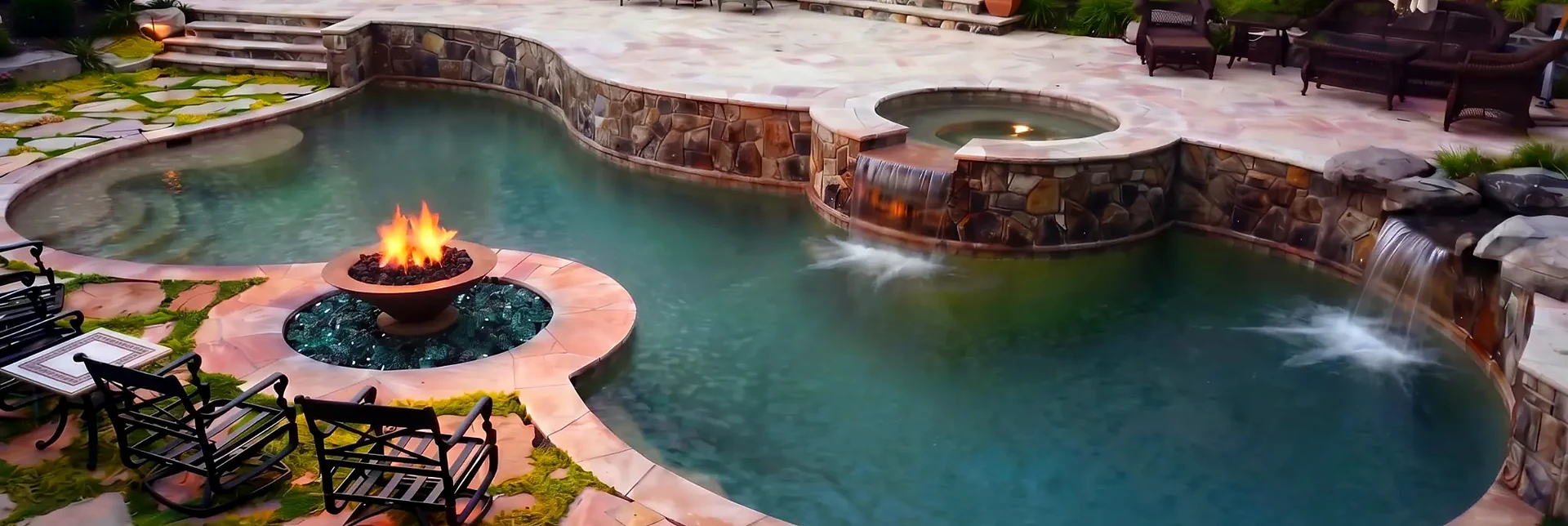
PebbleSheen is one of several exposed-aggregate finishes used in gunite pools, and it has become a common choice for homeowners seeking a durable, textured surface with a natural aesthetic. This review evaluates PebbleSheen from the perspective of a premium custom pool builder serving southeastern Pennsylvania and western New Jersey, focusing on appearance, tactile feel, installation considerations, maintenance, lifespan expectations, and how regional site conditions affect performance.
The goal is to give practical, locally-relevant guidance to homeowners and design professionals weighing PebbleSheen against other finishes. The review combines established material characteristics and industry practice—rather than manufacturer promises—with specific notes on Pennsylvania/New Jersey freeze-thaw, soil types, township permitting, drainage, and seasonal construction windows.
- PebbleSheen provides an exposed-aggregate look and a moderately textured feel; it is generally more durable than plaster but less smooth than polished finishes.
- Well-installed PebbleSheen resists staining and etching better than white plaster, but surface wear can occur in high-sun, acidic-water, or poor-drainage conditions common to some PA/NJ sites.
- Proper substrate preparation, consistent water chemistry, and winterization are critical in freeze-thaw areas and clay-rich soils; local access and drainage constraints can materially affect cost and outcome.
- Ownership costs include periodic chemical balancing, occasional acid washes or light sanding over many years, and potential re-application after 10–20 years depending on use and maintenance.
- Alternatives such as quartz-enhanced plasters, glass bead finishes, and tile offer trade-offs in texture, color options, and long-term maintenance; selection should account for site-specific risks and user preferences.
For broader planning guidance, explore our Pool Decisions resource center.
What PebbleSheen Is and How It Differs from Other Finishes
PebbleSheen is an exposed-aggregate pool finish composed of small natural pebbles or manufactured aggregate set in a portland-cement matrix. After placement and initial curing, the installer washes and brushes the cement paste from the surface to reveal the aggregate. The result is a textured surface with color coming from both the aggregate and the binding cement.
Compared with traditional white plaster (marble cement), PebbleSheen offers improved abrasion resistance and reduced susceptibility to surface etching. The texture is more pronounced than polished quartz or glass finishes, so the feel underfoot is grippier and less slippery. This makes PebbleSheen distinct from tile or fully polished finishes in terms of tactile properties and long-term visual aging.
Appearance: Color, Texture, and Aesthetic Options
One of the main draws of PebbleSheen is the natural, variegated look. Aggregates come in a range of colors—creams, blues, greens, and earth tones—so installers can create anything from deep lagoon looks to sunlit plaster-like appearances. Because the finish reveals the underlying aggregate, subtle color shifts occur with water depth, pool lighting, and sunlight angle.
Texture achieves both visual depth and functional grip. In shallower areas, individual pebbles are more visible and can create a visually busy surface. In deeper sections, the color often reads more uniform. This characteristic is useful for design, but it also means that color selection should be viewed in mockups and photos before committing.
For high-end custom pools in southeastern Pennsylvania and western New Jersey, homeowners often opt for aggregates with blue-green tones to complement landscaping and masonry. Aggregates with earth tones can harmonize with natural stone coping or bluestone patios common in the region. Because lighting influences perceived color strongly, consider your intended pool light color and landscape lighting plan when choosing the pebble blend.
Color Stability and Fading
Color stability depends on aggregate composition and the cement matrix. Natural stones are generally stable, but pigments in certain manufactured aggregates can fade slowly over time with UV exposure and aggressive water chemistry. In Pennsylvania/NJ, seasonal sun intensity and cloudy periods moderate UV but do not eliminate long-term photodegradation risks. Expect some mellowing of color over a decade, more quickly if water chemistry is poorly maintained.
Feel and Safety: Tactile Experience and Slip Resistance
PebbleSheen is known for a tactile, slightly rough surface that many users prefer for slip resistance. The exposed aggregate provides more friction than smooth plaster or polished surfaces, which can reduce slipping risk for children and adults moving around the pool perimeter or on steps.
However, the degree of roughness varies with the aggregate size and finishing technique. Coarser aggregate will feel rougher underfoot and may be abrasive to bare skin after prolonged contact. Finer aggregates produce a smoother feel while still maintaining better grip than standard plaster.
Practical Safety Considerations
Families with young children or seniors should consider aggregate size as part of the decision. Coarser finishes reduce slipping but can cause discomfort for those with sensitive feet. Where safety is a priority, select a smaller aggregate blend and discuss edge treatments for steps and benches to avoid sharp transitions. Non-slip coverings or textured coping can augment safety around the perimeter.
Durability and Longevity in Pennsylvania/New Jersey Conditions
Overall durability for PebbleSheen tends to exceed that of basic white plaster but trail behind premium quartz or glass bead blends in terms of resistance to staining and long-term color retention. In southeastern Pennsylvania and western New Jersey, several local factors directly impact longevity:
- Freeze-thaw cycles: Repetitive freeze-thaw can cause micro-cracking in the cement matrix when water migrates into defects. Proper winterization and ensuring pool shells are free of leaks reduces freeze-thaw stress.
- Soil conditions: Expansive clay soils common in parts of Pennsylvania can produce heave or lateral pressure on pool shells, requiring careful structural engineering and drainage design to prevent movement that stresses finishes.
- Groundwater and poor drainage: High groundwater levels complicate backfill and can increase hydrostatic pressure. Pools with inadequate drainage or poor sub-slab waterproofing may experience finishing failures if the structure shifts or permits water infiltration during freeze cycles.
Good installation practice—strict adherence to curing protocols, consistent water fill timing, and competent structural preparation—mitigates many regional risks. Still, homeowners should plan for periodic cosmetic maintenance and a realistic functional lifespan of 10–20 years, depending on use, chemistry, and site conditions.
Installation: What to Expect and Local Considerations
Installation quality is the single most important variable for PebbleSheen performance. A properly applied finish starts with a clean, sound substrate, correct mixing ratios, and appropriate curing. Experienced installers in this region will schedule placement to avoid extremes of temperature and precipitation.
In Pennsylvania and New Jersey, construction-season constraints affect timing. Cold weather placement risks poor cement hydration; heavy rains compromise cure and can wash binder before adequate set. Builders typically avoid installations when overnight temperatures consistently fall below 40°F and will monitor township regulations that sometimes limit noisy construction hours or restrict winter excavation.
Site Access, Permitting, and Drainage
Access: Many suburban and historic properties in southeastern PA and western NJ have narrow easements or limited driveway access. Transporting aggregates, mixing equipment, and hand tools can increase labor costs or necessitate smaller crews. Confirm access before scheduling work; some sites will require off-site staging or sidewalk permits.
Permits: Township building departments vary. Some jurisdictions require detailed pool plans, engineered drawings for retaining walls, and specific electrical permits for lighting and equipment. Early coordination with local code officials prevents delays—especially for sites near wetlands, steep slopes, or historic districts.
Drainage: Proper surface and sub-surface drainage prevents hydrostatic problems. Designers should include perimeter drains, positive site grading, and, where needed, sump systems. For properties with high groundwater or seasonal saturation, builders sometimes recommend a dewatering plan during excavation and a well-planned backfill strategy with crushed stone to promote drainage.
Maintenance Requirements and Seasonal Care
PebbleSheen requires maintenance similar to other cementitious pool finishes, but with a few particularities. Routine water chemistry—free chlorine, pH, total alkalinity, calcium hardness, and cyanuric acid where applicable—remains the foundation of care. Because the aggregate exposes more surface area, poorly balanced water can lead to localized staining or accelerated surface wear.
A typical maintenance regimen includes weekly testing and chemical adjustment, regular brushing with a soft-to-medium brush to prevent scale buildup, skimming, and system checks. In regions with hard water, scale forms more readily on exposed aggregate and will need mechanical or gentle acid cleaning by professionals from time to time.
Winterization in Freeze-Thaw Zones
Winterization is critical in Pennsylvania and New Jersey. Steps include lowering water to the recommended level—typically below skimmers for open returns—blowing out lines per equipment design, adding winterizing chemicals, and installing a secure cover. For PebbleSheen, avoid dramatic water chemistry swings during drain and refill cycles; slow, controlled refill and attention to stabilizing chemistry reduces stress on the finish.
If a pool is left partially filled during a freeze, ensure skimmers and jets are properly winterized to prevent localized freeze damage. We recommend professional winterization in areas with frequent freeze-thaw cycles to reduce risk of structural and finish failure.
Expected Ownership Costs and Long-Term Care
Owning a PebbleSheen pool includes predictable recurring costs and occasional larger expenses. Budgeting realistically helps avoid surprises.
- Routine maintenance: weekly chemicals, monthly service visits, and electric costs for pumps/heaters. Small pools may average lower utility usage; larger heated pools increase annual energy costs considerably.
- Periodic professional cleaning: every 1–3 years depending on water chemistry and bather load, including pressure washing, light sanding or replaster touch-ups, and acid washing if scale accumulates.
- Re-surfacing: plan for resurfacing in 10–20 years. The exact interval depends on initial installation quality, local water chemistry, usage patterns, and freeze-thaw exposure.
- Repairs: localized patching for chips or spalls may be required after accidental impact or if substrate movement occurs. Structural repairs due to subsurface issues (e.g., hydrostatic lift) represent a higher cost and are not typical for the finish alone.
Providing a cost range is challenging without a specific property and usage profile. As a planning figure, homeowners should expect annual maintenance costs in the low thousands for a typical custom residential pool, and resurfacing costs that vary widely by region and size but often fall in the range of several thousand to tens of thousands of dollars when including scaffolding, draining, and reapplication.
Pros and Cons: An Honest Assessment
The following list synthesizes common advantages and disadvantages based on material properties, installation practice, and regional factors.
Pros
- Durability and abrasion resistance superior to plain white plaster in many cases.
- Good slip resistance; attractive natural aggregate appearance with variable color depth.
- Less frequent bleaching or etching visible compared with plain cementitious plasters when chemistry is maintained.
- Relatively broad palette of aggregates for tailored aesthetics in custom pool designs.
Cons
- Texture can be abrasive on bare feet, especially with coarser aggregates.
- Color mellowing and minor surface wear occur over time; not as color-stable as some glass or synthetic finishes.
- Requires disciplined water chemistry and professional care in hard-water or acidic-water locales common to PA/NJ.
- Installation quality is critical; low-skilled application can lead to early failure or uneven appearance.
Ideal Users and Poor-Fit Users
Understanding who benefits most from PebbleSheen helps match finish to lifestyle and site conditions.
Ideal Users
- Homeowners who prioritize a natural, exposed-aggregate aesthetic that complements stone patios and landscape masonry common in the region.
- Families seeking moderate slip resistance without committing to tile or traction mats on all surfaces.
- Clients who accept routine maintenance and understand the need for periodic professional cleaning and eventual resurfacing.
Poor-Fit Users
- Owners wanting a perfectly smooth, soft-feeling surface (e.g., those coming from vinyl liners or polished finishes).
- Properties with chronic drainage, high groundwater, or expansive soils that pose a structural risk unless mitigated by engineering.
- Clients who want minimal long-term maintenance and absolute color stability without the willingness to budget for higher-end glass or quartz surfaces.
Limitations and Common Failure Modes
PebbleSheen is not immune to problems. Common limitations include delamination due to poor bond with the gunite substrate, staining from metal ions or organics in poorly treated source water, and localized pitting or spalling from freeze-thaw stress where drainage is inadequate.
In southeastern Pennsylvania and western New Jersey, localized soil movement and fluctuating groundwater can cause stress cracks in the shell, and if these defects allow water infiltration behind the finish, spalling or flaking may follow. Prevention centers on thorough pre-install structural assessment, appropriate waterproofing strategies, and active drainage systems.
Alternatives to Consider
When PebbleSheen is not the best match, the following alternatives may be appropriate:
- Quartz-enhanced plaster: finer, smoother, generally more color-stable than standard plaster with improved stain resistance.
- Glass-bead aggregate finishes: offer high color stability and a smoother but still slip-resistant surface; typically costlier.
- Tiled finishes: excellent for high-wear zones and decorative features; tile and grout require different maintenance but can last decades if properly installed.
- Vinyl liners: for those prioritizing a soft feel and low initial cost—but not practical for custom gunite shells and limited in shape and longevity compared with cementitious finishes.
Each alternative brings trade-offs in cost, feel, and maintenance. For homes in flood-prone or high-groundwater lots, tile with a robust waterproofing regime or specialty coatings applied over appropriate substrates can sometimes be preferable.
SPCP Recommendation: Selection and Installation Checklist
SPCP recommends the following checklist for homeowners considering PebbleSheen in southeastern PA and western NJ. These steps represent our process for reducing risk and aligning expectations:
- Conduct soil and groundwater evaluation, especially on properties with known clay layers or prior drainage issues.
- Engage with the township early to confirm permit needs, setback restrictions, and electrical requirements for lights/equipment.
- Select an aggregate sample and review full-scale mockups under natural lighting and pool lighting conditions.
- Schedule installation in the appropriate season—typically avoiding late fall freezes and early spring thaw to ensure proper cure.
- Plan for perimeter drainage: French drains, positive slope grading, and sump strategies as required by site conditions.
- Arrange for professional winterization and an annual maintenance contract to preserve finish life.
Following these steps helps align design intent with site realities and reduces the likelihood of premature finish issues.
Installation Cost Drivers and Timeline
Costs vary with pool size, shape, access, and local labor rates. Key cost drivers include:
- Aggregate selection and specialty pigments.
- Extent of surface prep needed—repairing gunite, patching, or reprofiling increases cost.
- Access difficulty and need for special equipment to move materials.
- Seasonal scheduling: expedited work or off-season complications can affect pricing.
A typical installation timeline—from final surface prep through cure and return-to-service—runs several weeks. Curing protocols often require the pool to be filled and chemically balanced within a specified window to prevent shrinkage cracking and to optimize finish bonding. Builders will coordinate fill timing with municipal water availability and reasonable weather forecasts.
Verdict: When PebbleSheen Makes Sense
PebbleSheen is a solid mid- to high-range finish that suits many custom gunite pool projects in southeastern Pennsylvania and western New Jersey. It balances a natural aesthetic, good traction, and relative durability compared with plain plaster. The finish fits clients who value textured appearance, are willing to maintain water chemistry, and who have properties where site conditions are addressed through proper engineering and drainage.
It is less appropriate for owners wanting a razor-smooth, hotel-like pool floor, or for those whose sites present unmitigated groundwater or expansive-soil challenges unless structural mitigation is performed. The finish remains a competitive option for many custom pools, provided the owner budgets for realistic lifecycle maintenance and chooses an experienced installer.
Helpful Tables: Comparative Overview
| Finish Type | Typical Texture | Maintenance | Approx. Lifespan (with care) |
|---|---|---|---|
| PebbleSheen (exposed aggregate) | Moderate to coarse; grippy | Routine chemistry, periodic cleaning, resurfacing 10–20 yrs | 10–20 years |
| Quartz-enhanced plaster | Smoother, fine aggregate | Routine chemistry, less frequent cleaning than pebble | 10–20+ years |
| Glass-bead aggregate | Smooth to moderate; high color stability | Higher upfront cost, similar chemistry needs | 15–25 years |
| Ceramic tile | Very smooth; grout lines | Grout maintenance, occasional re-grouting | 20+ years |
Keep Reading — Build Your Knowledge
- LUXURY POOL DESIGN IN KING OF PRUSSIA, PA — CUSTOM INGROUND POOLS
- LUXURY POOL DESIGN IN DRESHER, PA — CUSTOM INGROUND POOLS
- LUXURY POOL DESIGN IN HOLLAND, PA — CUSTOM INGROUND POOLS
- LUXURY POOL DESIGN IN NEW BRITAIN, PA — CUSTOM INGROUND POOLS
- LUXURY POOL DESIGN IN BLUE BELL, PA — CUSTOM INGROUND POOLS
- Browse All Pool Decisions Articles →
Body CTA
If you are considering PebbleSheen for a custom gunite pool in southeastern Pennsylvania or western New Jersey, we invite you to start your pool journey with a site assessment. SPCP will evaluate soil conditions, access, drainage, and local permitting to recommend finishes that match your lifestyle and long-term maintenance preferences.